































































































































The method
How a print-in-place chain works
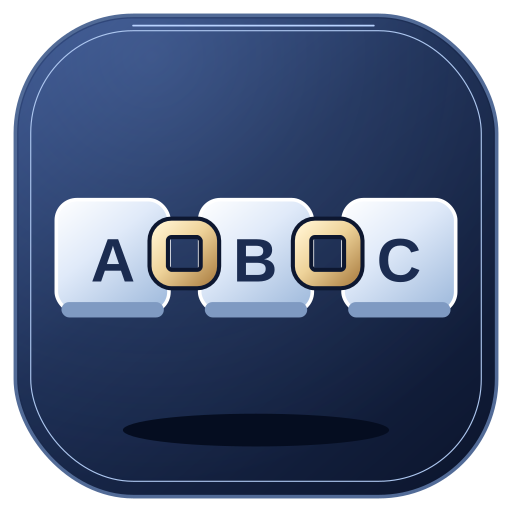
The chain alternates flat tiles and upright links. Each tile ends in an open window with a raised bar across it. Each link is a small rectangular loop standing on its edge: its feet stand in the windows of two neighbouring tiles, its bottom bar runs under both tiles’ end bars, and its top bar runs over them. So every link and tile are joined like real chain links, straight off the printer.
Everything starts on the bed or bridges a few millimetres, so there are no supports to remove.
- Type the letters, or choose a plain chain.
- Pick the tile shape, size and ends.
- Set the clearance from your tolerance test.
- Print, then flex each joint to free it.
Sizes
Bracelet and keychain sizes
For a bracelet, wrap a strip of paper round the wrist, mark where it meets, and measure it. Allow a little extra so it isn’t tight, plus whatever the clasp or cord adds. The readout shows the chain’s length as you type; add spacer tiles (spaces) to make it longer.
For a keychain, three to six letters is plenty: longer names make a long, floppy chain.
Printing
Printing tips
- Layers: 0.12–0.2 mm. The bridges are short, so most printers manage at default settings.
- Letters on one nozzle: add a colour change at the tile thickness. The tops of the links change colour too, which looks deliberate.
- Long chains: turn the chain diagonally on the bed if it’s longer than the bed is wide.
- Freeing it: bend each joint gently up and down. If a link is stuck, raise the clearance by 0.05 mm.
Questions, answered
Is it free to use?
Yes. No account, no watermark, no limits.
Can I make a whole class set?
Make one name at a time and download each, or put several chains side by side on one plate in your slicer.
Is it safe for children?
Small tiles and links are a choking hazard for children under three. Don’t give a bracelet or necklace to a young child to wear unsupervised.
Sources
Print advice is a starting point drawn from these references, checked on 2026-11-09. Community posts are one maker's experience, not a specification.