Directed energy deposition melts material as it is being deposited. NIST's ASTM-derived definition is a process that uses thermal energy, typically from a laser, to fuse materials by melting them as they are deposited, and NIST's technology overview describes material sprayed onto a target while a focused beam melts it. The ISO/ASTM 52900 abbreviation is DED.
Instead of spreading a powder bed, a DED machine feeds powder or wire straight into a melt pool created by a laser, electron beam or electric arc, often on a multi-axis robot or CNC machine. That makes it suited to large near-net-shape metal parts and to adding material onto existing parts, such as repairing worn components. Loughborough University lists other names for the process, including laser engineered net shaping (LENS), directed light fabrication, direct metal deposition and 3D laser cladding.
How a part is made
- Plan the toolpath from a CAD model, often using 4- or 5-axis motion so material can be added from different angles.
- Prepare the atmosphere: argon shielding for most laser and arc processes, or a vacuum chamber for electron beam deposition.
- Create a melt pool on the base plate or existing part with the energy source.
- Feed powder or wire into the melt pool while the head moves along the path.
- Build up layer by layer while sensors and software monitor the process.
- Heat treat, hot isostatic press or machine the near-net-shape part to final dimensions.
Feedstock and energy sources
Loughborough and HP both list laser, electron beam and plasma arc as DED energy sources, and powder or wire as feedstock. Loughborough notes that wire uses material more efficiently, since all of it goes into the part, but deposits less accurately than powder. The process normally runs in a controlled, low-oxygen environment. Commercial systems tend to be named after the combination of energy source and feedstock, as the table shows.
| Variant | Energy source | Feedstock | Example |
|---|---|---|---|
| Laser powder DED (LENS) | Laser | Metal powder carried into the melt pool by gas | Optomec LENS systems |
| Electron beam DED (EBAM) | Electron beam in a vacuum | Metal wire | Sciaky EBAM |
| Wire arc additive manufacturing (WAAM) | Electric arc | Metal wire | Cranfield University WAAMMat research, WAAM3D |
Laser powder deposition
In Optomec's LENS process, the deposition head delivers both the laser and the powder. Argon carries metal powder through nozzles to the laser's focal point, where it melts into a pool on the part, and the argon also shields the melt pool. Optomec's brochure for its LENS 600 and 800 systems lists standard laser power between 1,000 and 3,000 W depending on model, a melt pool 0.3 to 5.0 mm across, and a chamber kept below 10 ppm of oxygen and moisture.
Optomec lists repair of worn components, rework of mis-machined parts, modification of tooling, wear-resistant coatings and short-run production as applications, with Inconel alloys, stainless steels and titanium alloys as common materials. After deposition, it says, parts can be heat treated, hot isostatically pressed or machined.
Electron beam and wire arc processes
Sciaky's EBAM feeds metal wire into an electron beam inside a vacuum chamber, so no argon shielding is needed. Sciaky quotes gross deposition rates of 3.18 to 18.14 kg (7 to 40 lb) of metal per hour and parts up to 5.79 × 1.22 × 1.22 m, and says two wires can be fed into one melt pool to make graded or custom alloys. Its listed materials include titanium alloys, Inconel 718 and 625, tantalum, tungsten, niobium, 300-series stainless steels and aluminum alloys.
Wire arc additive manufacturing combines an electric arc as the heat source with wire as the feedstock, as Cranfield University describes it. Cranfield says WAAM has low capital and operating costs, is cheaper than powder-based additive methods, and suits medium to large components. It reports a 1.2 m titanium wing part built in 37 hours and an aluminum wing part over 2.5 m long made in under a day. Its spin-out company, WAAM3D, lists titanium, steel, bronze, nickel and aluminum.
Repair and hybrid manufacturing
Because a DED head can deposit onto any surface it can reach, the process is widely used to add material to parts that already exist. Loughborough describes DED as typically used to repair or add material to existing components. A nozzle on a 4- or 5-axis arm can deposit from many directions while the part stays fixed, and moving the head does not change the material flow rate.
Optomec's LENS systems can be fitted with rotary and tilt-rotate tables for 4- and 5-axis work and are driven by standard G and M codes, the same language CNC machine tools use. That makes DED a natural partner for machining: build up a feature or a worn surface, then machine it to size. Sciaky likewise says EBAM can be used for repair and remanufacturing as well as new parts.
Microstructure, accuracy and finish
DED melts a relatively large pool and cools it quickly. Loughborough gives cooling rates of around 1,000 to 5,000 °C per second and notes that overlapping passes re-melt earlier material, producing a uniform but alternating microstructure. It cites typical layer thicknesses of 0.25 to 0.5 mm, compared with about 0.1 mm for powder bed fusion layers.
That trades detail for speed. HP notes that DED accuracy is often sacrificed for speed and that post-processing may be needed, and Loughborough says finishes vary. Plan to machine every functional surface of a DED part, and design it with extra stock where it will be machined.
When to choose DED
DED makes most sense for large metal parts that would otherwise be machined from big forgings or plate, for adding features to existing parts, and for repair. Sciaky says EBAM can cut material cost, lead time and machining time by as much as 80 percent compared with conventional manufacturing, and Cranfield focuses its WAAM work on large aerospace parts such as stiffened panels and wing ribs, which are costly to machine from titanium.
For small, intricate parts with fine internal channels, powder bed fusion is usually the better fit because its thinner layers and smaller melt pool give much finer detail. Loughborough also notes that DED can in principle use polymers and ceramics, but it is typically used with metals.
At a glance
Strengths
- Builds large metal parts at high deposition rates
- Adds material to existing parts for repair and new features
- Wire feedstock is cheaper and easier to store than powder, according to Sciaky
- Multi-axis heads deposit from many angles
Limitations
- Coarse resolution and rough surfaces
- Parts usually need finish machining
- Rapid thermal cycling must be controlled
- Mostly limited to weldable metals
Typical applications
- Repair of worn components and tooling
- Large titanium and nickel alloy aerospace structures
- Wear-resistant coatings and cladding
- Near-net-shape preforms for machining
Materials for this process
18 printers in the catalog
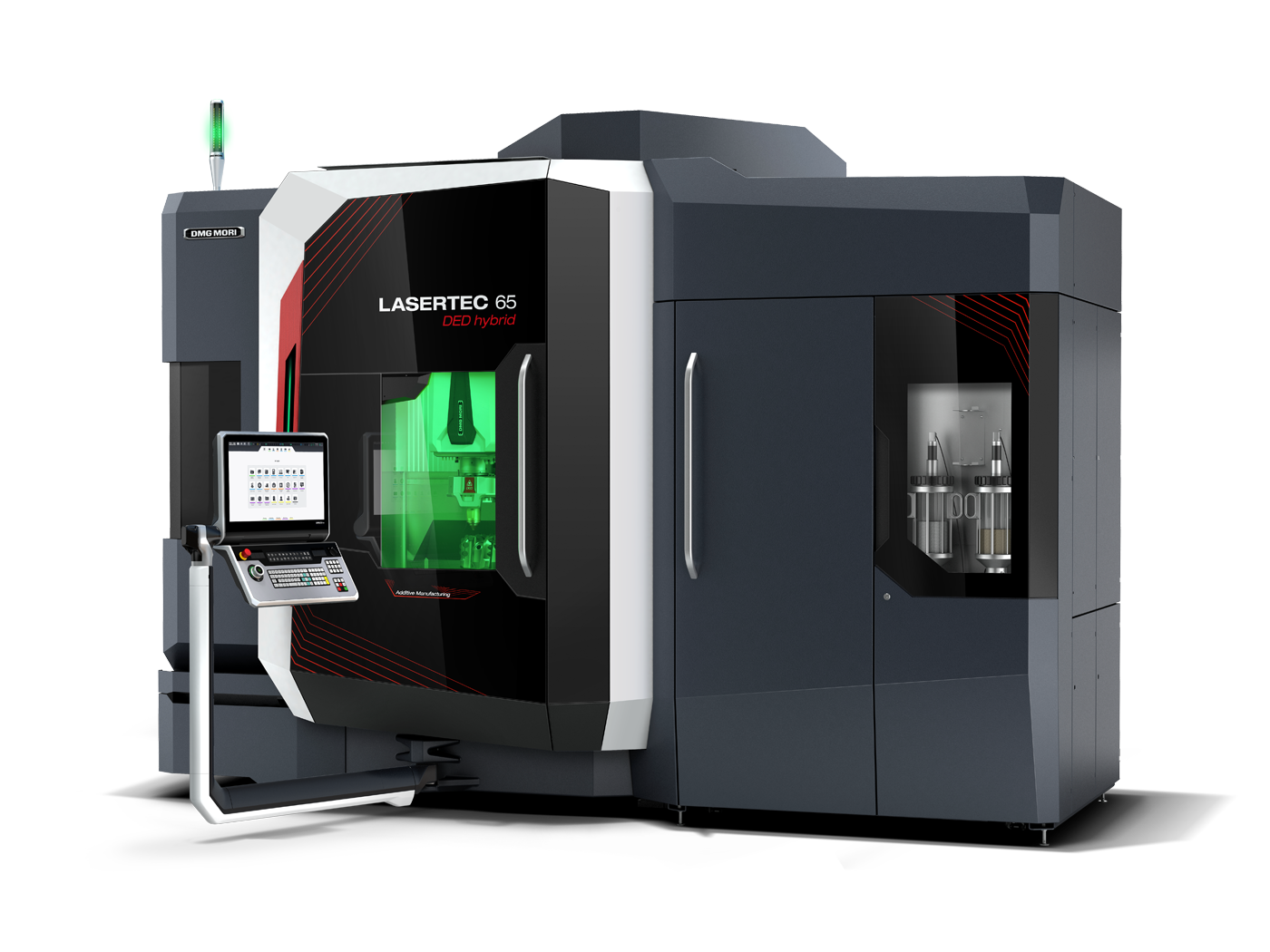
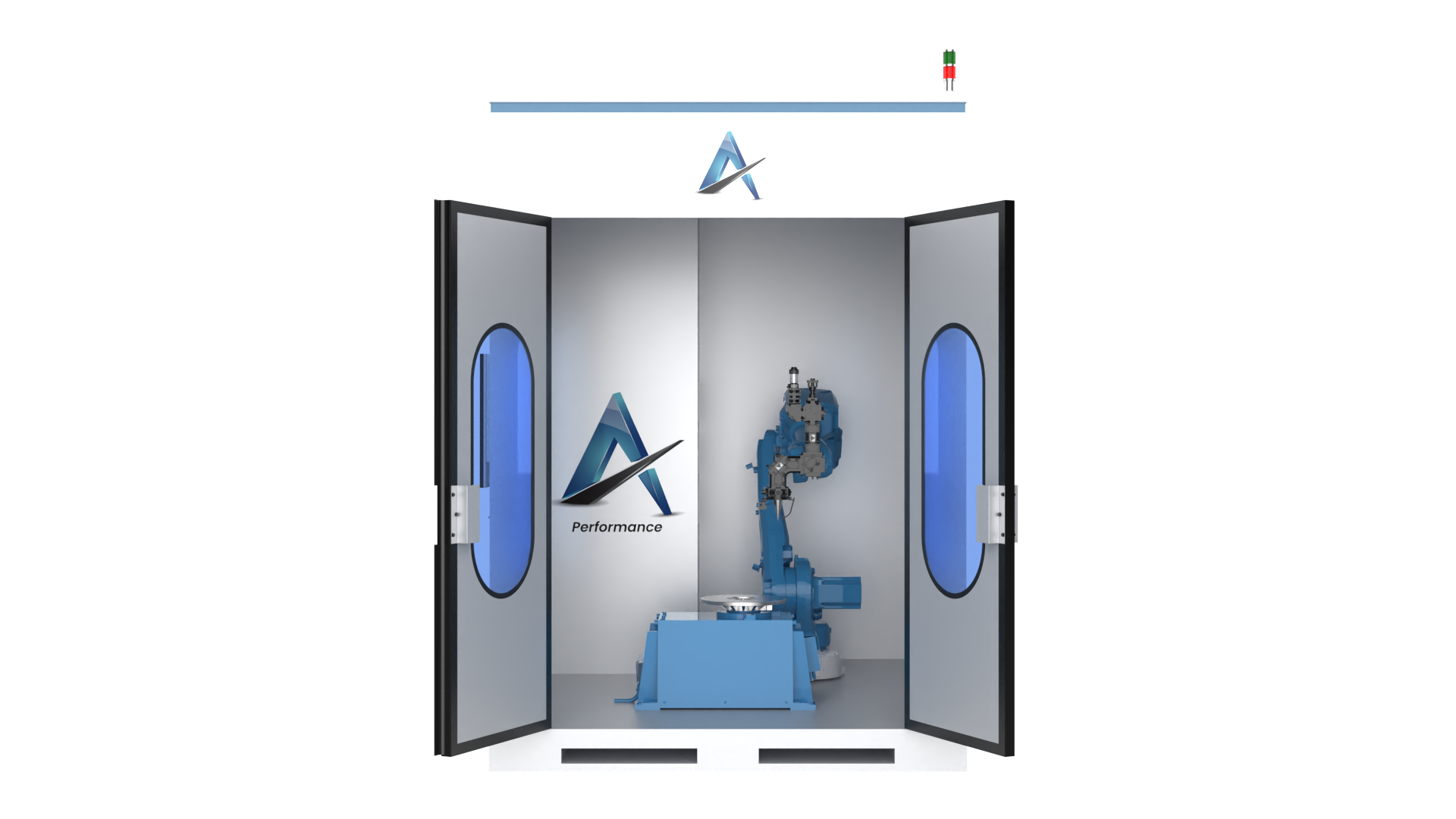
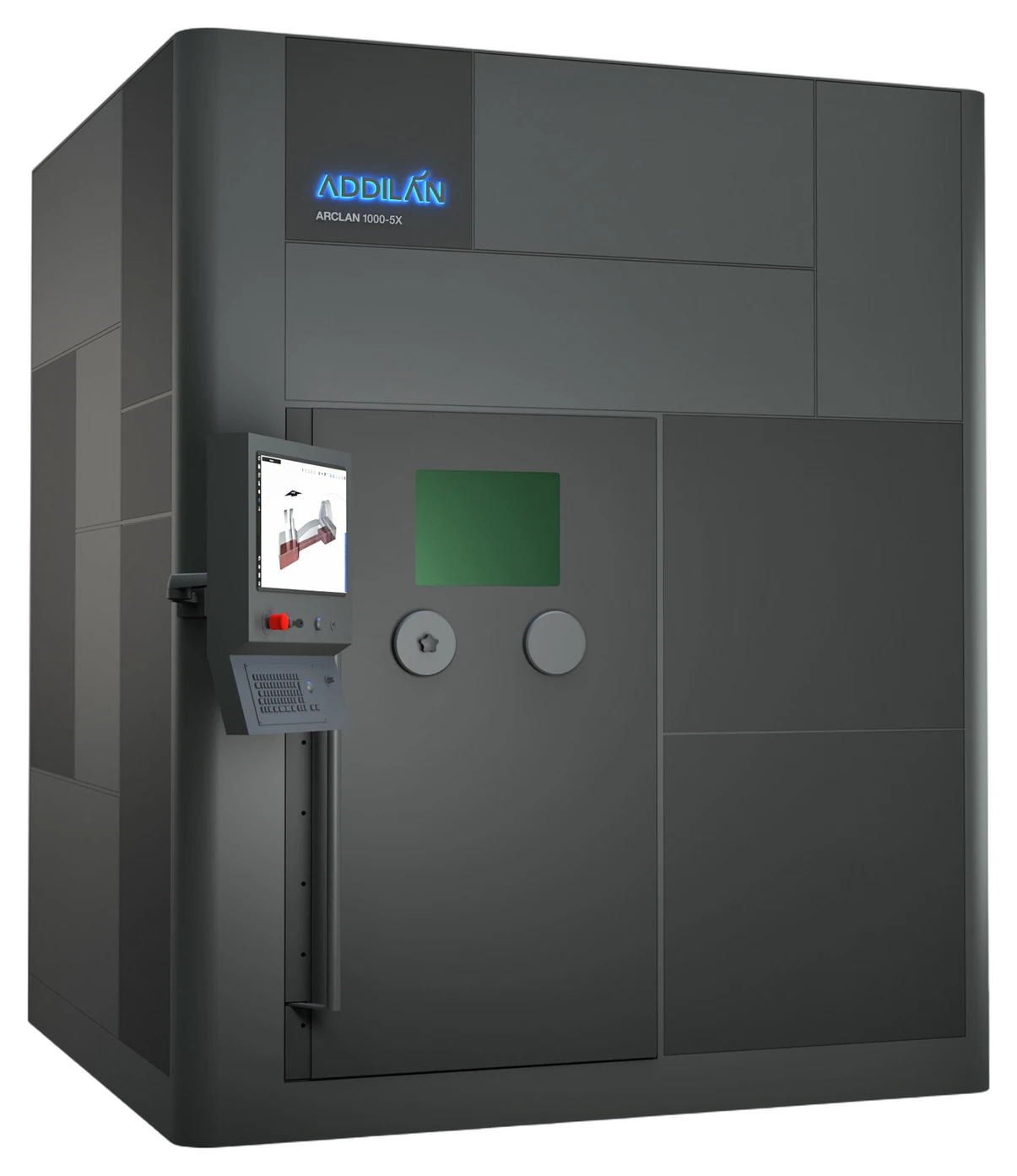
Profiles in this family, by the process name each manufacturer uses: WAAM (6), Wire laser DED (5), Powder laser DED (3), Electron beam wire DED (2), Laser DED + machining (1), WAAM (plasma arc) (1).
Common questions
What is the difference between DED and powder bed fusion?
Powder bed fusion spreads a full layer of powder and melts selected areas, which gives fine detail but limits part size to the build chamber. DED feeds powder or wire directly into a melt pool at the head, so it can build much larger parts and add material to existing ones, with coarser detail.
Is WAAM the same as welding?
It uses the same physics. Cranfield University describes WAAM as an electric arc heat source combined with wire feedstock, which is the basis of arc welding. The difference is that the deposit is built up layer by layer along a planned toolpath to form a whole part, then machined to final shape.
Can directed energy deposition print plastics?
Loughborough notes that DED can in principle use polymers and ceramics, but it is typically used with metals. The commercial systems described here, from Optomec, Sciaky and WAAM3D, all work with metals such as titanium, nickel alloys, stainless steel and aluminum.
Sources
- Costs and Cost Effectiveness of Additive Manufacturing (process definitions, section 2.1) NIST · Checked 2026-10-15
- Additive Manufacturing Technologies NIST · Checked 2026-10-15
- A Comprehensive Overview of Additive Manufacturing Processes Through a Time-Based Classification Model (Koltsaki and Mavri, 2024) 3D Printing and Additive Manufacturing, via PubMed Central · Checked 2026-11-02
- Directed Energy Deposition Loughborough University Additive Manufacturing Research Group · Checked 2026-11-02
- Powder Bed Fusion Loughborough University Additive Manufacturing Research Group · Checked 2026-11-02
- Introduction to 3D printing processes HP · Checked 2026-11-02
- LENS 800 and LENS 600 Additive Manufacturing Controlled Atmosphere Systems Optomec · Checked 2026-11-02
- Metal Additive Manufacturing with EBAM Technology Sciaky · Checked 2026-11-02
- Printing the future: WAAMMat case study Cranfield University · Checked 2026-11-02
- A Global Leader in WAAM Technology & Solutions WAAM3D · Checked 2026-11-02
An explainer synthesized from the cited references, not hands-on testing. Vendor names for processes are trademarks of their owners and are mapped to the ISO/ASTM 52900 families for orientation.