Material jetting builds parts the way an inkjet printer puts ink on paper, except that each droplet is build material. NIST's ASTM-derived definition is a process that typically uses a moving inkjet printhead to deposit material across a build area, and NIST's technology overview adds that the deposited droplets are then cured with ultraviolet light. The ISO/ASTM 52900 abbreviation is MJT.
Most commercial machines jet liquid photopolymer and cure each layer with UV light, as in Stratasys PolyJet and 3D Systems MultiJet Printing (MJP). Because a print head can carry several materials, these machines can combine rigid, flexible, transparent and colored materials in one part. They are mainly used for realistic prototypes, medical models and casting patterns rather than load-bearing parts.
How a part is made
- Prepare the file and assign materials or colors to each region of the model.
- Jet droplets: printheads pass over the build tray and deposit build material and support material wherever each layer needs them.
- Cure: UV lamps harden photopolymer droplets as they are laid down, while wax droplets solidify as they cool.
- Lower the tray by one layer and repeat until the part is complete.
- Remove the support material by dissolving, melting or water jetting it away.
- Clean the part; many parts need little further finishing.
Droplets, not powder or filament
Loughborough University's Additive Manufacturing Research Group describes two ways to make droplets. Continuous systems break a stream into droplets that are charged and steered by deflection plates, with unused droplets recycled. Drop-on-demand systems release a droplet only when needed, using a thermal actuator or a piezoelectric element. Loughborough notes that piezoelectric heads handle a wider range of materials, and 3D Systems says its MJP machines use piezo printheads.
Viscosity is the critical property. A jettable material has to be thin enough to form droplets, and Loughborough says it also affects how quickly the head refills and therefore print speed. That requirement limits the family mainly to photopolymers and waxes. HP adds that some systems jet metals, and it describes NanoParticle Jetting as a variant that uses powder suspensions.
Curing, layers and accuracy
Photopolymer droplets are cured layer by layer. Stratasys says UV lamps cure each thin layer as it is deposited and bond it to the layer below, and Loughborough notes that PolyJet parts therefore need no separate post-cure. Layers are very thin: 3D Systems quotes layers as thin as 16 microns for MJP, and Loughborough lists the same 16-micron figure for a Stratasys Objet500 Connex3.
Precise droplet placement gives smooth surfaces and fine detail, and Loughborough says it also means low waste. 3D Systems claims MJP accuracy can rival SLA for many applications. These are vendor and reference figures; the accuracy you actually get depends on part size, orientation and material.
Multi-material and full color
Because each printhead can carry a different material, material jetting can vary properties within one build. Stratasys says its J850 Prime can print seven resins at once and produce more than 600,000 color combinations, and that rigid and flexible materials can be combined in a single print. 3D Systems offers composites that mix rigid and elastomeric materials.
That makes material jetting a strong choice for prototypes that must look and feel like the final product, such as soft-touch grips on rigid housings, clear covers, packaging mockups, or anatomical models with different tissues in different colors. HP lists aesthetic and color prototypes, anatomical models for education and surgical planning, art and jewelry among typical uses.
Supports and post-processing
Material jetting prints support material alongside the part wherever there is an overhang or cavity. The support is a different material designed to come away easily. Loughborough says it can be removed with a sodium hydroxide solution or a water jet. 3D Systems uses meltable or dissolvable supports that it says can clear delicate features and internal cavities with almost no handwork.
Once the supports are gone, parts usually need little more than cleaning. Stratasys says minimal post-processing is required, and Loughborough notes that part quality is largely set during printing. This is one of the main practical differences from resin vat printing, where parts must be washed and post-cured.
Materials
The material range is narrower than in extrusion or powder bed fusion, and it is mostly photopolymer. HP notes that jetted parts can be brittle and considers the process best for prototyping rather than functional end-use parts. The table summarizes the material types 3D Systems and Stratasys describe.
| Material type | What it offers | Typical use |
|---|---|---|
| Rigid photopolymers | Molded-plastic appearance in white, black, clear, gray and other colors | Appearance and fit prototypes |
| Rubber-like elastomers | Soft, high-elongation material | Grips, seals and overmold prototypes |
| Mixed rigid and flexible materials | Different properties in different regions of one part | Multi-material assemblies |
| Biocompatible photopolymers | Grades rated to USP Class VI or ISO 10993, per 3D Systems | Medical devices and dental parts |
| Casting wax | Melt and burnout similar to standard casting wax | Investment casting and jewelry patterns |
| High-temperature photopolymers | Heat deflection up to 250 °C, per 3D Systems | Heat testing and tooling |
How it compares with vat and binder jetting
Material jetting and vat photopolymerization both cure photopolymers with light. The difference is that jetting places material only where it is needed, so different materials can sit side by side in the same layer, while a resin vat holds one material at a time and the part has to be washed afterward.
Material jetting is also distinct from binder jetting. NIST's definitions separate the two: binder jetting deposits a liquid bonding agent into a powder bed, while material jetting deposits the build material itself. HP's comparison suggests binder jetting for faster builds in a wider range of materials, and material jetting for precise, multi-color prototypes.
At a glance
Strengths
- Very thin layers and smooth surfaces
- Multiple materials and full color in one part
- Accurate droplet placement with little waste
- Minimal post-processing
Limitations
- Mainly limited to photopolymers and waxes
- Parts can be brittle and are not ideal for functional loads
- Support material is printed and consumed on most parts
- Material viscosity limits what can be jetted
Typical applications
- Realistic appearance prototypes
- Anatomical and surgical planning models
- Investment casting patterns and jewelry
- Medical and dental devices
- Packaging and overmold prototypes
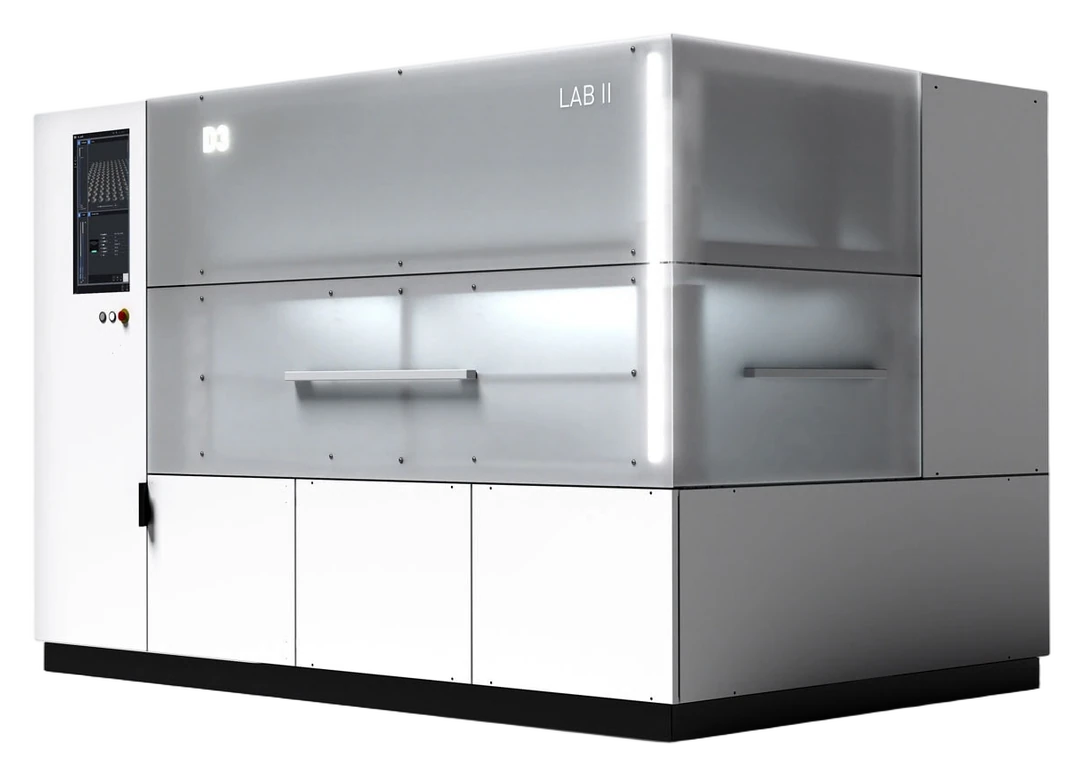
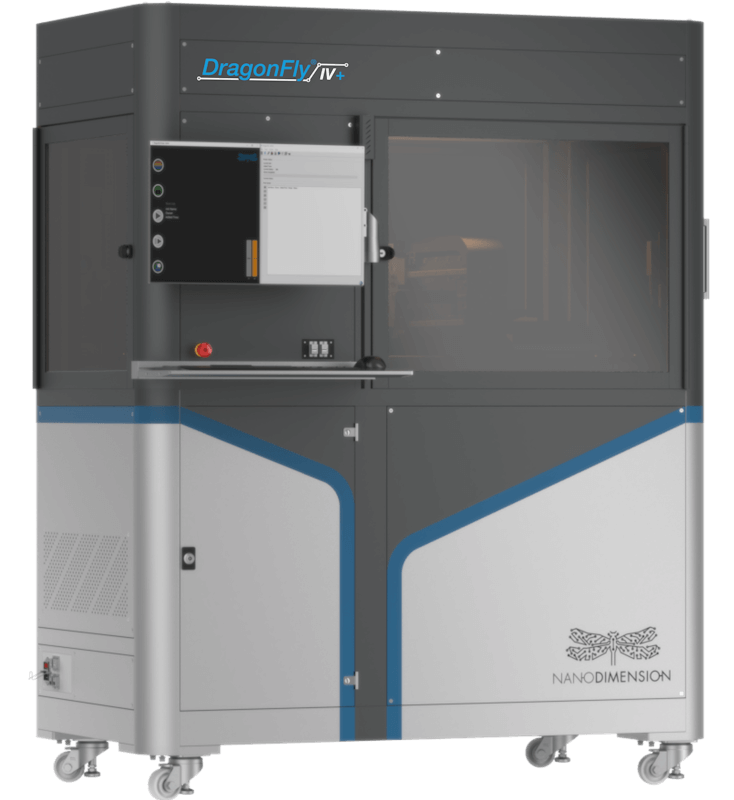
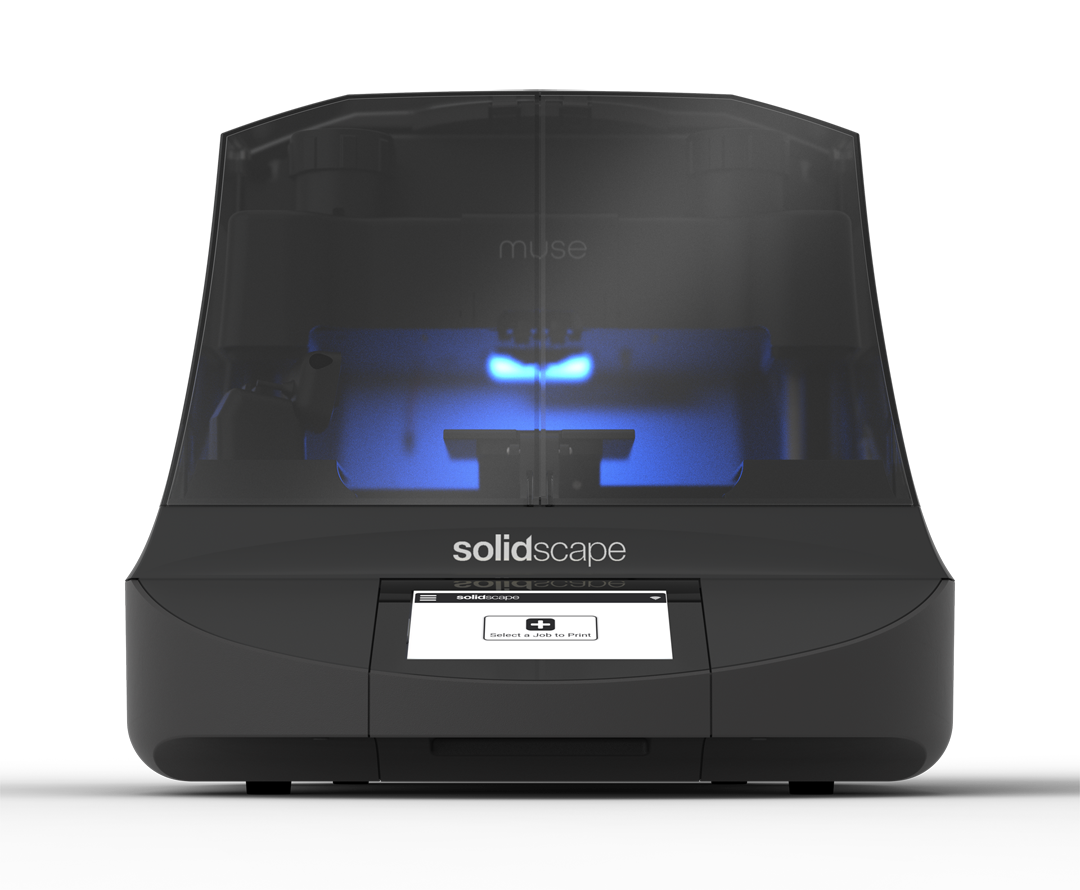
18 printers in the catalog
Profiles in this family, by the process name each manufacturer uses: PolyJet (13), NPJ (2), Micro Particle Jetting (1), Inkjet material deposition (1), Drop-on-demand material jetting (1).
Common questions
What is the difference between PolyJet and SLA?
Both cure photopolymer with light. PolyJet jets droplets of resin from printheads and cures them with UV lamps, so it can place several materials and colors in one layer. SLA cures one resin held in a vat with a laser. Stratasys says PolyJet needs minimal post-processing, while SLA parts need washing and curing.
Can material jetting make functional parts?
Sometimes, but it is mainly a prototyping process. HP notes that jetted parts can be brittle and considers the process best for prototypes. 3D Systems and Stratasys offer tough, high-temperature and biocompatible grades for jigs, tooling and medical devices, so check the material data for the load and environment.
Is material jetting the same as binder jetting?
No. In material jetting the printhead deposits the build material itself, usually a photopolymer. In binder jetting the printhead deposits a liquid binder into a bed of powder, and the powder becomes the part. NIST's process definitions draw exactly this distinction.
Sources
- Costs and Cost Effectiveness of Additive Manufacturing (process definitions, section 2.1) NIST · Checked 2026-10-15
- Additive Manufacturing Technologies NIST · Checked 2026-10-15
- A Comprehensive Overview of Additive Manufacturing Processes Through a Time-Based Classification Model (Koltsaki and Mavri, 2024) 3D Printing and Additive Manufacturing, via PubMed Central · Checked 2026-11-02
- Material Jetting Loughborough University Additive Manufacturing Research Group · Checked 2026-11-02
- PolyJet Technology for 3D Printing Stratasys · Checked 2026-11-02
- MultiJet 3D Printing 3D Systems · Checked 2026-11-02
- Comparing Binder jetting, Material Jetting, Multi Jet Fusion and SLS HP · Checked 2026-11-02
An explainer synthesized from the cited references, not hands-on testing. Vendor names for processes are trademarks of their owners and are mapped to the ISO/ASTM 52900 families for orientation.