Before you begin
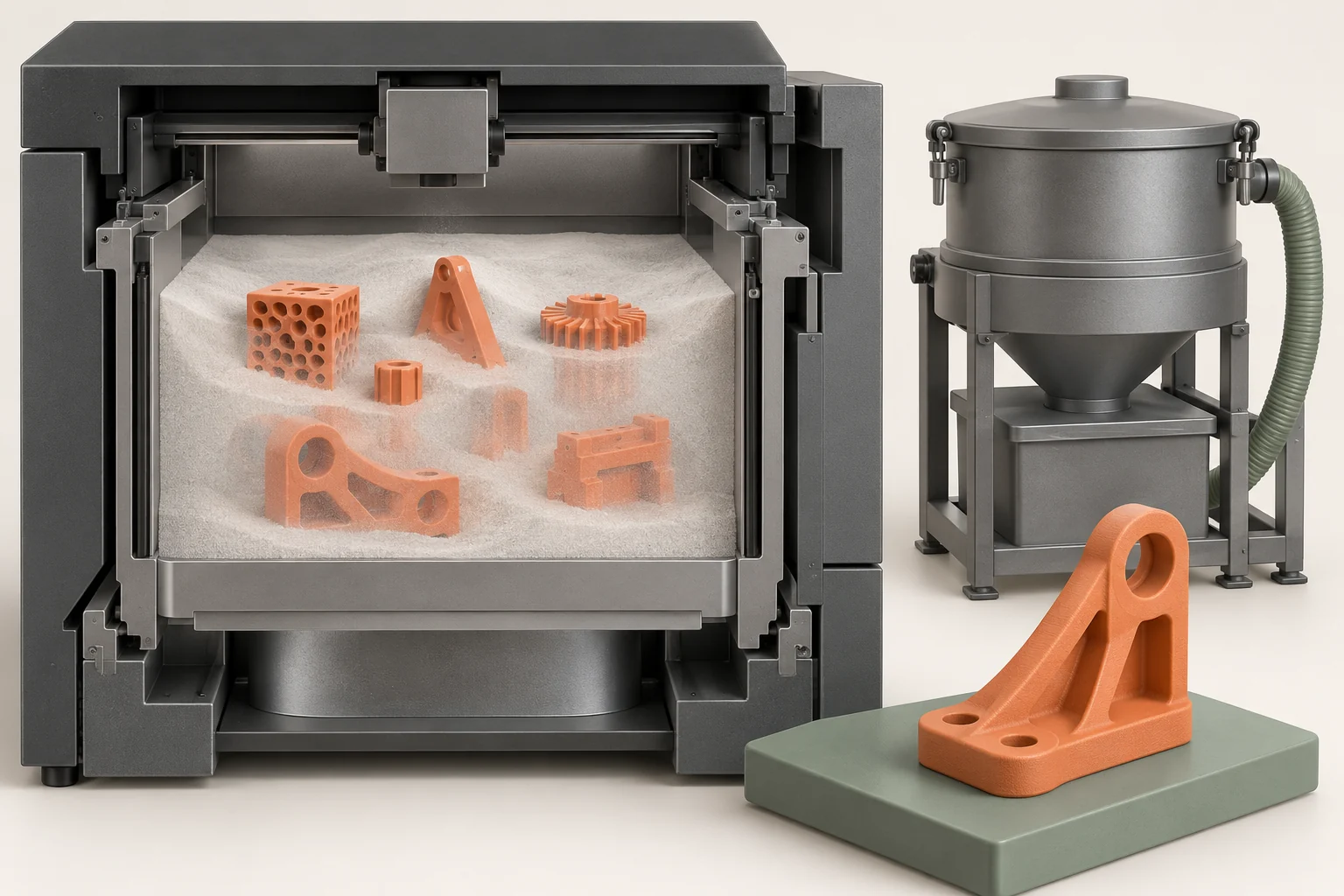
Selective laser sintering turns selected regions of a powder bed into solid parts. Surrounding powder supports the geometry, which allows many polymer SLS jobs to avoid the separate support structures familiar from resin and filament printing. The freedom is useful, but the work continues after the laser stops: the build must cool, parts must be recovered, and residual powder must be removed.
Evaluate SLS as a complete batch process. This guide follows a hypothetical batch of small housings from geometry review to accepted parts, showing where scheduling, powder handling, and finishing affect the result. The examples provide planning methods; operating temperatures, powder ratios, spacing, and equipment procedures must come from the exact machine and material documentation.
Design for powder removal as well as printing
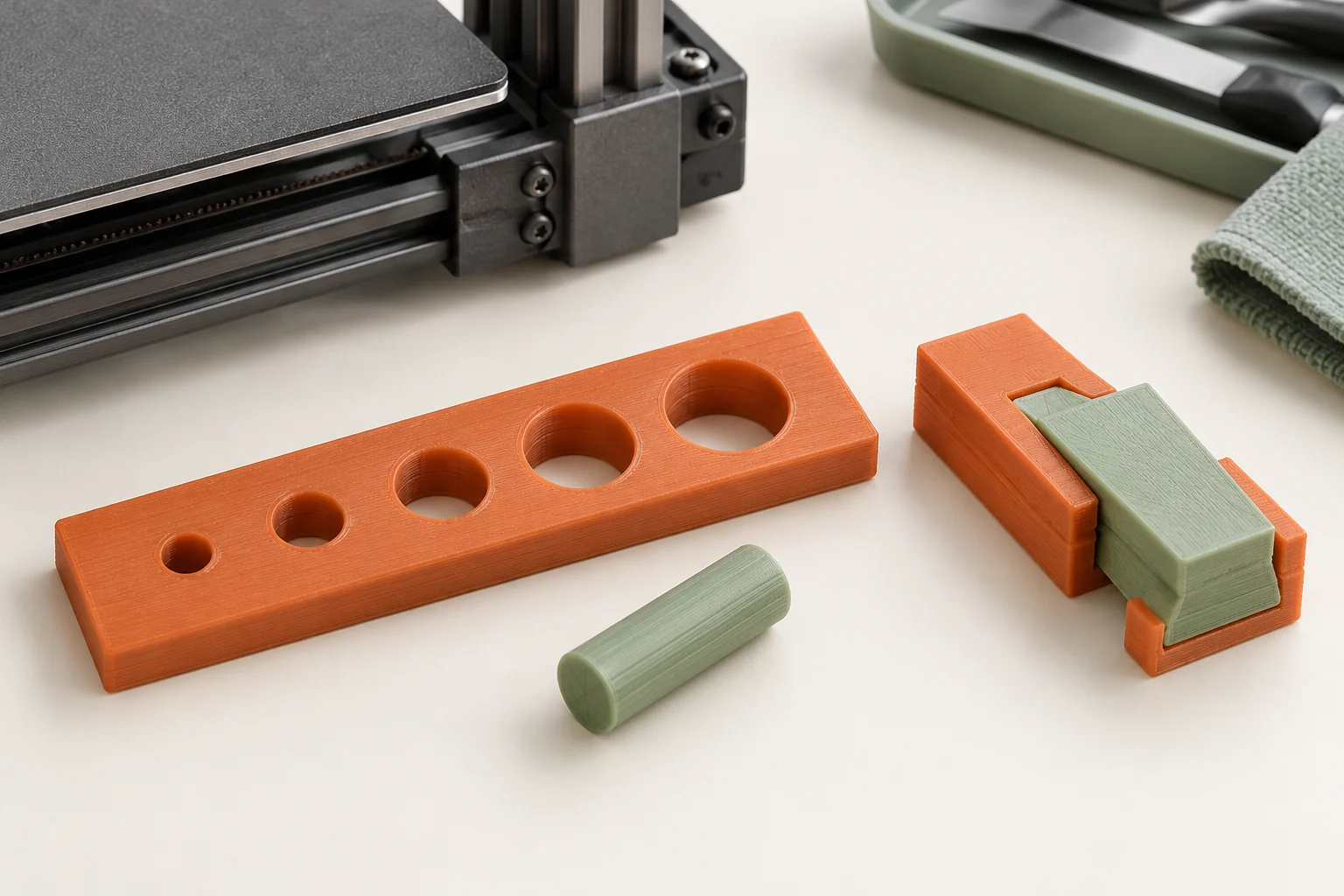
Unfused powder can support complex geometry during the build, but it must still be removed from the finished part. Enclosed cavities and inaccessible channels can trap it. Before packing a batch, inspect the model in section and identify the openings through which powder will leave. Use the machine's design guidance for wall thickness, clearances, channels, and other feature limits.
For our housing example, imagine a cable passage hidden behind an internal rib. Our suggested review asks whether the intended cleaning method can reach both ends and whether the remaining powder can actually escape. If the passage is essential, test it in a small sample before printing a full batch. Splitting a housing into two accessible pieces may simplify cleaning and inspection even if a single-piece version technically fits inside the build volume.
Pack a batch around repeatability
SLS can place parts throughout a three-dimensional build volume, but packing is more than filling empty space. Orientation, spacing, geometry, and the material's supported process all matter. Follow the printer's placement rules and inspect the complete arrangement. Keep critical surfaces and features identifiable so that the finished parts can be compared with their locations in the job.
Our suggested trial contains a representative housing and a simple inspection feature in more than one planned region of the build, where the supported spacing allows it. Label the digital positions and record which part comes from each. This gives a practical way to notice whether an issue is associated with geometry, orientation, or location. A tightly packed job is useful only when its parts can be recovered, cleaned, and accepted consistently.
Treat cooling as part of manufacturing
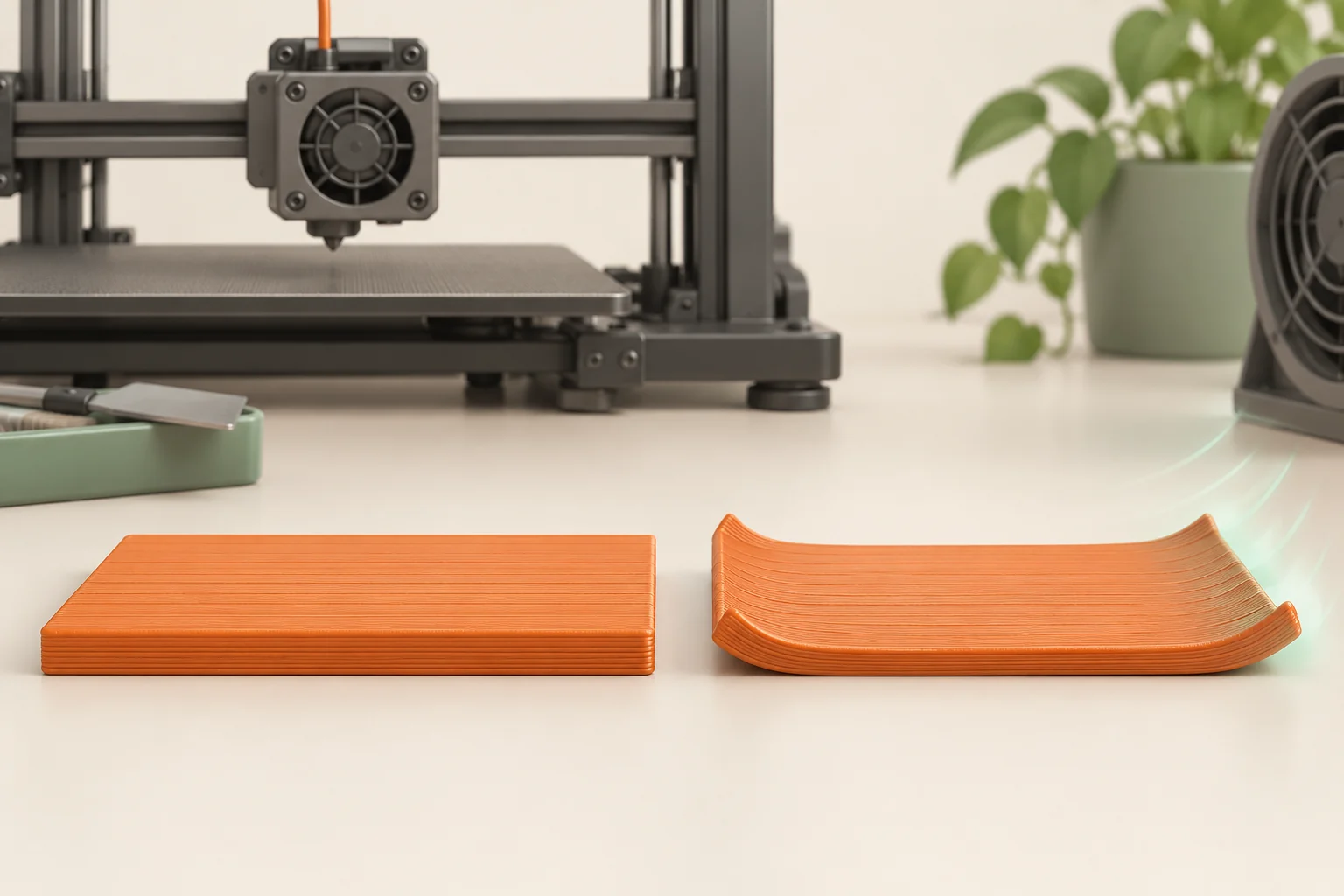
The powder bed and parts retain heat after printing. Formlabs' cooling guidance describes how rapid or premature unpacking can increase distortion, and its results depend on material, geometry, packing, and acceptance criteria. Follow the specified machine status and handling procedure. A finished laser cycle does not mean the chamber is ready to open, move, or unpack.
For scheduling, write down separate milestones: printing ends, chamber transfer is permitted, unpacking is permitted, cleaning is complete, and inspection is complete. Use the equipment's actual criteria for each milestone rather than a guessed universal waiting period. Our planning suggestion is to record these times for a representative batch. That reveals whether a second chamber, a different start time, or more finishing capacity would improve turnaround without shortening a required cooling step.
Recover parts using the intended powder system
In the Fuse workflow, the cooled powder cake is raised in the recovery station and parts are separated from surrounding powder, then cleaned further using the supported equipment. The recovery station and cleanup process are part of the system. Plastic powder also has handling and combustion considerations; use the specified controls, protection, and compatible grounded powder-cleaning equipment rather than assuming a household vacuum is suitable.
Our suggested recovery checklist starts with a count of the expected parts and their digital arrangement. Keep a marked location for extracted parts awaiting cleaning and another for inspected parts. This prevents a small component from being lost in the recovered material and stops unfinished pieces from joining the accepted batch. Finish with the manufacturer's equipment-cleaning routine so the next build begins from a known condition.
Understand the fresh-powder refresh rate
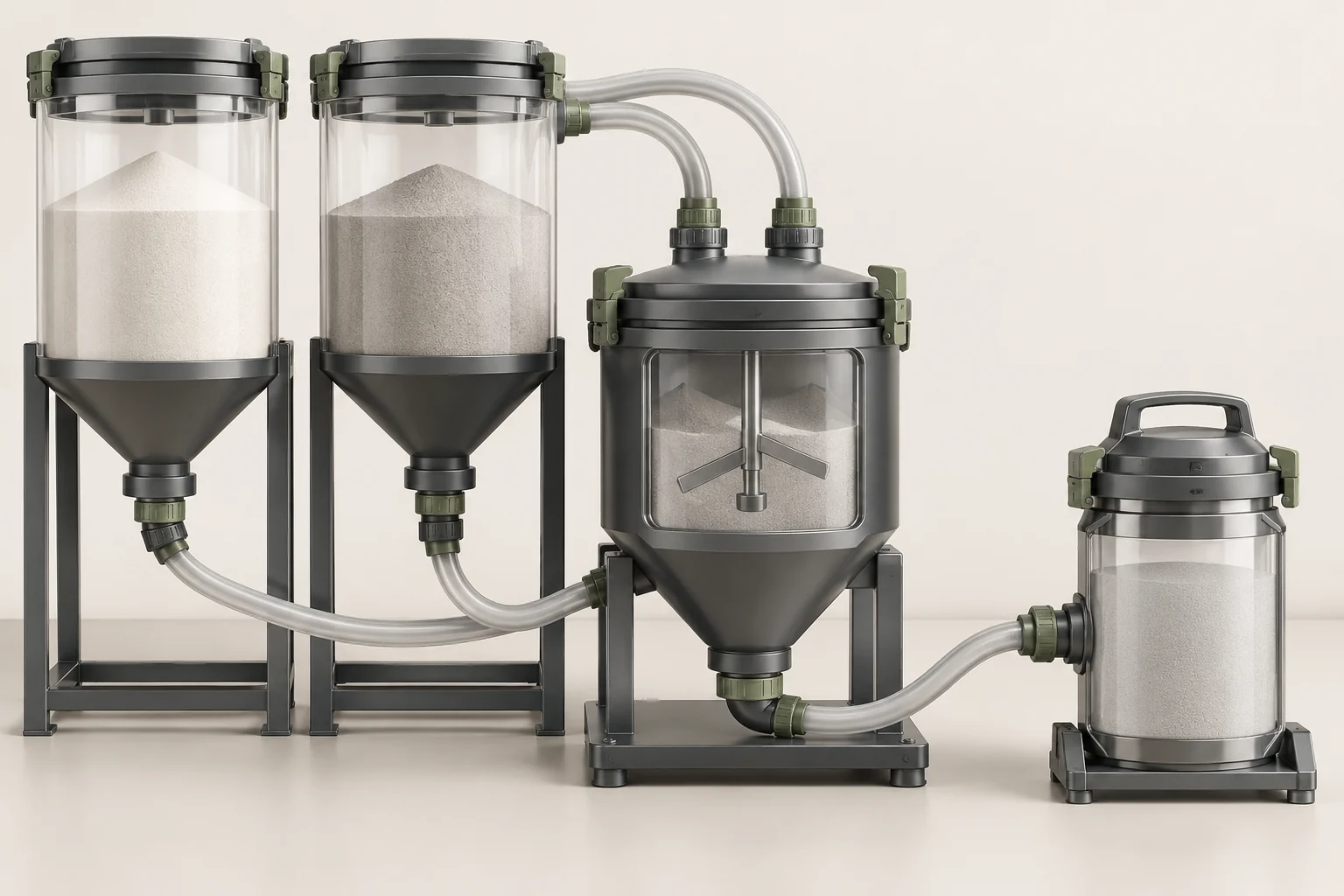
Recovered powder is blended with fresh powder according to the material workflow. The refresh rate describes the fresh proportion in that blend. Formlabs publishes different recommendations for different powders and conditions, and notes that performance outside validated rates is not guaranteed. A lower fresh fraction therefore cannot be treated as a free saving with unchanged results.
As a hypothetical arithmetic example, a specified 30% fresh blend totaling 10 kg would contain 3 kg of fresh powder and 7 kg of suitable recovered powder. This illustrates the definition, not a recommendation for every nylon. In practice use the material's current rate, the station's supported measuring and mixing method, and its rules for recovered powder eligibility. Record the blend and material lot with the job so later defects can be investigated.
Protect powder identity and condition
Recovery is valuable only when the powder remains suitable for reuse. Formlabs identifies contamination from fibers, failed-print debris, blasting media, and damaged or dirty sieves as possible sources of problems. Store and handle powder according to its instructions, with closed labeled containers and a workspace separated from unrelated dust-producing activities. Keep maintenance and recovery records linked to the material.
Our practical suggestion is to treat an unidentified container as a hold item until its contents and history are resolved. Avoid combining it with a known supply simply to clear the bench. If a batch develops unusual inclusions or gaps, preserve the relevant job and powder records while following the manufacturer's troubleshooting procedure. A clean-looking surface alone cannot establish that a recovered blend is suitable for the next production run.
Calculate output using accepted parts
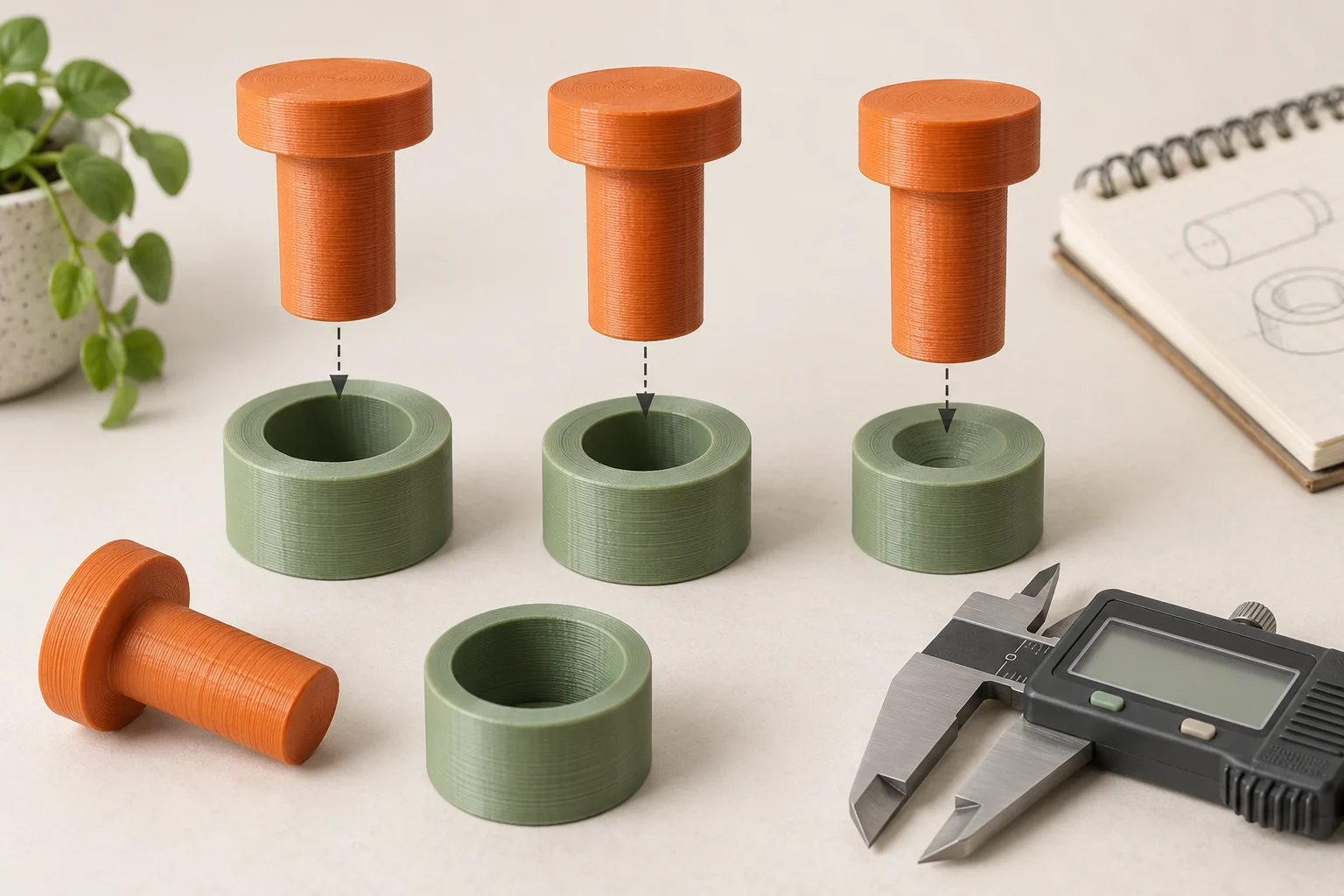
A useful batch record includes fresh material added, recovered material retained, waste, labor for setup and finishing, total elapsed time, and the number of accepted pieces. Define acceptance before printing: for the housing, that might include lid seating, unobstructed passages, mounting-hole location, and a specified surface condition. Cosmetic success should not silently replace the functional requirement.
Our suggested comparison divides the batch's relevant production cost by the accepted quantity, then compares that result with a service quotation covering equivalent material, finishing, and inspection. If 40 pieces were printed but only 32 pass, use 32 as the output. Separate one-time setup effort from recurring work so the first trial does not misrepresent steady production. This creates a more useful decision than comparing only powder price or the machine's advertised print speed.
| Record | Why it matters |
|---|---|
| Print and cooling milestones | Shows actual turnaround |
| Fresh, recovered, and discarded powder | Shows material use |
| Preparation and finishing labor | Shows work outside the printer |
| Accepted quantity and rejection reason | Shows usable output |
Common questions
Does support-free mean any enclosed shape is practical?
No. Unfused powder still needs a removal route. Inspect channels and cavities and validate the cleaning method on representative geometry.
Can recovered powder be reused indefinitely without fresh material?
Follow the exact powder's recovery and refresh requirements. The permitted blend and material history are part of the process, and one supplier's rate does not apply universally.
When is an SLS batch actually finished?
For production planning, count through the required cooling, extraction, cleaning, finishing, and acceptance inspection. The end of laser exposure is only one milestone.
Continue with the sources
- Selective Laser Sintering (SLS): Complete Guide Formlabs · Checked 2026-10-15
- Choosing the right powder Formlabs · Checked 2026-10-15
- Filling a powder cartridge with the Fuse Sift Formlabs · Checked 2026-10-15
- Costs and Cost Effectiveness of Additive Manufacturing (process definitions, section 2.1) NIST · Checked 2026-10-15
- Cooling a build chamber before cleaning prints Formlabs · Checked 2026-10-16
- Basic powder cleanup and recovery (Fuse Sift) Formlabs · Checked 2026-10-16
- Powder care, storage, and disposal Formlabs · Checked 2026-10-16
- Powder contamination (SLS) Formlabs · Checked 2026-10-16
This guide synthesizes the cited references and includes illustrative examples, not hands-on test results. Follow the instructions for your exact printer, material, and software version. Generated illustrations simplify geometry and equipment; they are not photographs, measured results, or model-specific setup instructions.