Before you begin
A spool's condition is part of the printing process. Filament can absorb water from the surrounding air, and that moisture can change how it behaves when heated in the nozzle. The symptoms may resemble a tuning problem, leading to unnecessary temperature, retraction, or flow changes.
Good moisture management separates three jobs: keeping suitable filament dry, restoring a spool using its approved drying process when needed, and preserving that condition during printing. A storage box, an active dryer, and a humidity reading answer different questions. This guide shows how to connect them into a repeatable workflow without assigning one drying temperature to every material.
Identify the product before deciding what it needs
Keep the complete product name, manufacturer, grade, color, and batch information with the spool. 'Nylon' or 'flexible filament' describes a family, not a complete processing specification. Formulation, fillers, and spool construction can change the relevant requirements. Find the current supplier instructions for storage, drying, and printing before choosing equipment or a cycle.
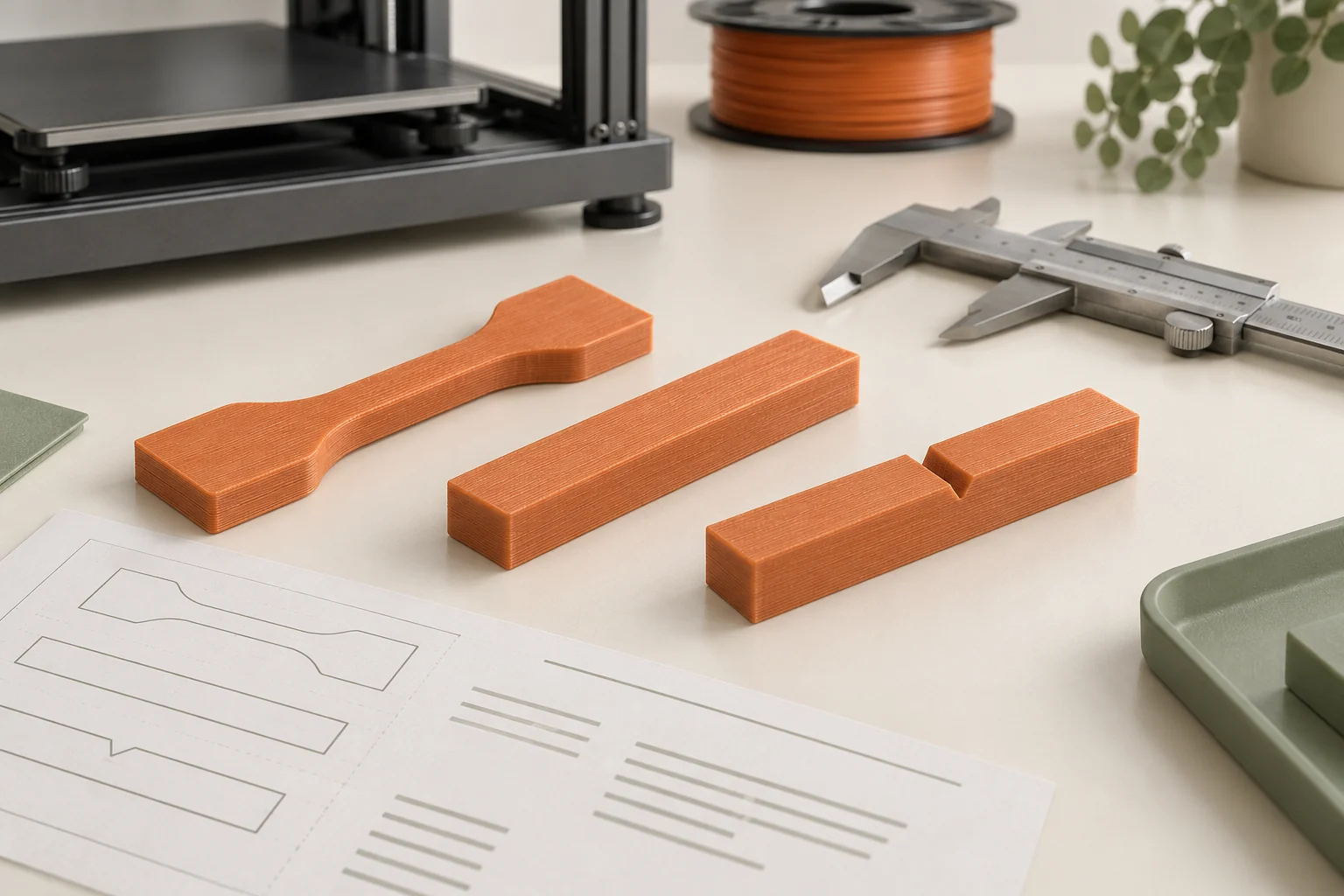
Prusa describes nylon as strongly moisture-sensitive, while Polymaker's PolyMide PA6-CF product information provides instructions for that particular filled grade. Neither is a reason to apply one nylon recipe to every polyamide. Our suggested label links directly to the exact product document and records its version or access date. If the label is missing and the material cannot be identified confidently, keep it out of a project that depends on known processing conditions.
Recognize clues without treating them as proof
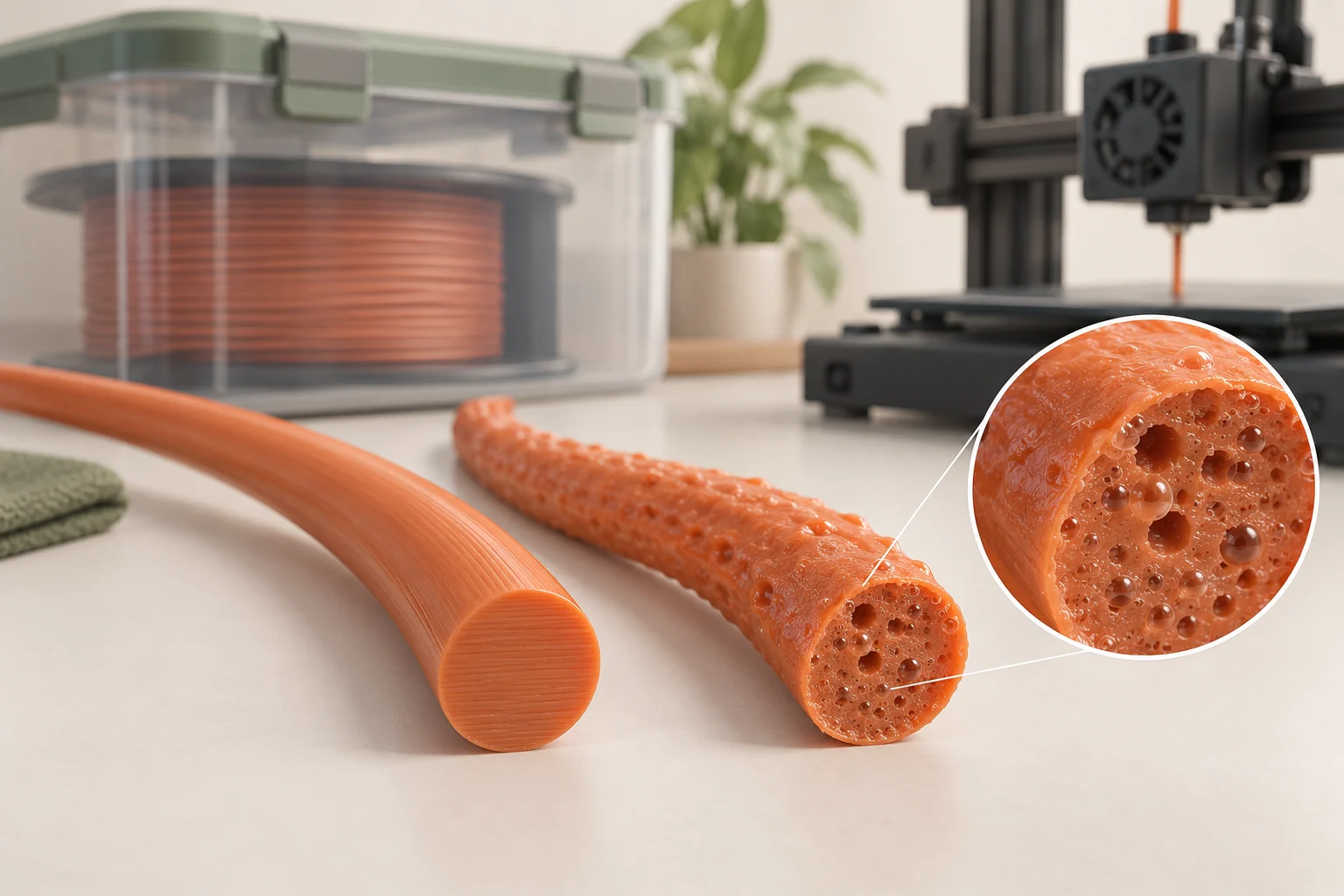
Rough surfaces, bubbles, increased stringing, and inconsistent extrusion can suggest a moisture problem. Compare them with the spool's previous behavior and storage history. A material that always produces a slightly different surface should not be judged against an unrelated polymer. Likewise, a new stringing problem may still come from nozzle residue or changed travel settings.
Our suggested evidence checklist asks whether the same project previously succeeded, how long the spool was exposed, whether its container remained sealed, and whether a known-condition sample behaves differently. Keep a failed test piece and photograph it before cleanup. These observations help justify a drying comparison, but avoid declaring a spool wet solely because one strand snaps or one wall has a gap.
| Observation | What it suggests | What it does not establish |
|---|---|---|
| New bubbles or rough extrusion | Moisture may be contributing | The exact moisture content |
| Stringing increases after storage changes | Material condition deserves a check | That retraction is correct |
| Dry-box humidity rises | Storage conditions changed | That all filament is already damaged |
| Drying comparison improves the same test | Moisture was likely a contributor | That every remaining defect has the same cause |
Separate passive storage from active drying
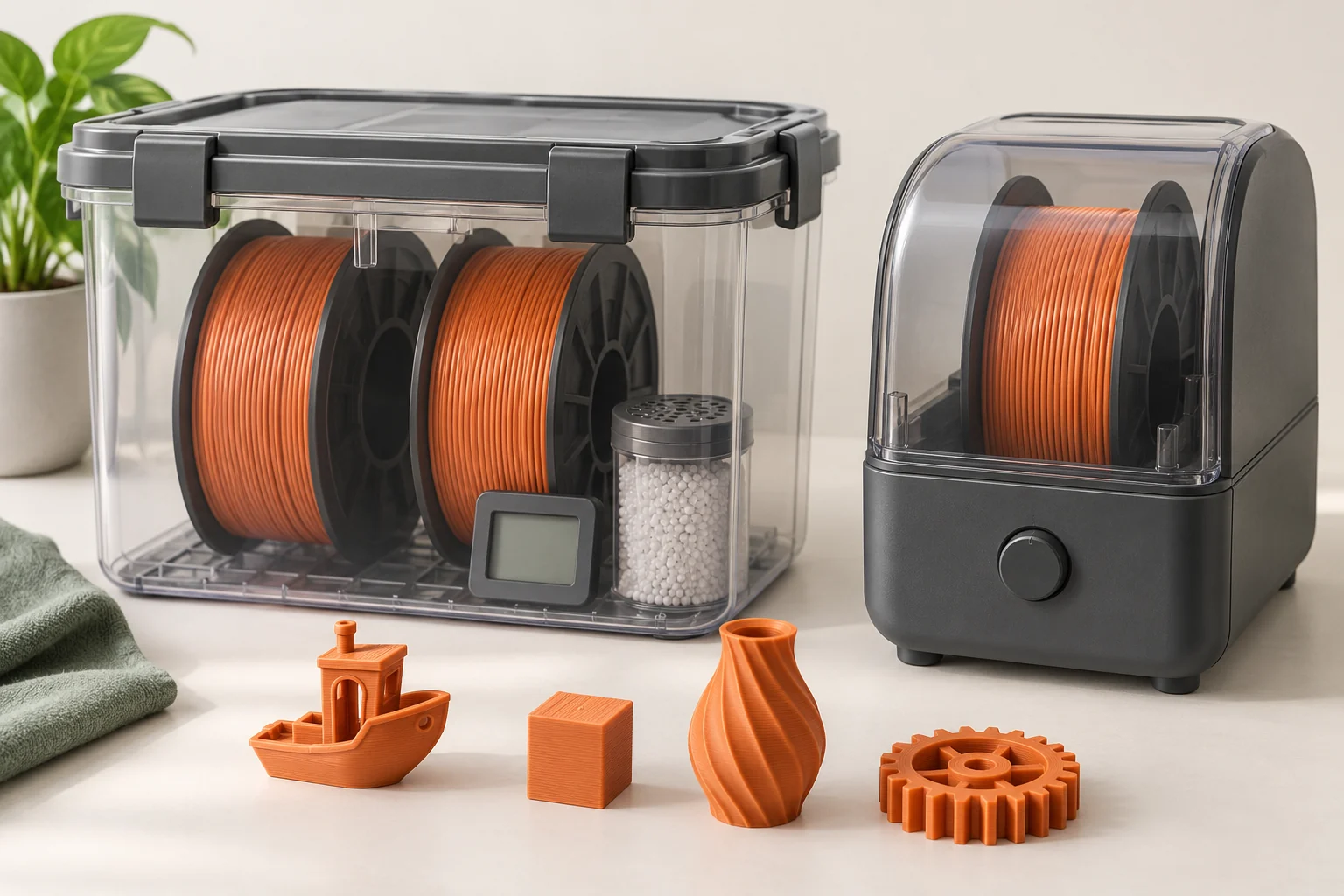
A sealed container with suitable desiccant limits exposure to humid air. It is useful for maintaining filament that is already in an acceptable condition. Prusa explicitly describes its USS Drybox as a storage and feeding solution rather than an active dryer. Putting a wet spool inside does not prove that moisture inside the polymer will be removed sufficiently for printing.
Active drying applies the conditions specified for the material, including the required temperature and duration and the dryer's intended airflow or moisture-removal arrangement. Think of storage as maintaining the result of that process. Our proposed workflow is identify, dry if required, transfer promptly to suitable storage, and feed under the required conditions. This is a process sequence, not a claim that every spool needs drying before every print.
Validate the drying setup before starting
Read the exact filament's temperature and time guidance and confirm that the dryer can operate within it. Then check the reel, labels, adapters, and any other items that will be heated. The filament may tolerate a cycle that its spool does not. Prusa's drying guide distinguishes several spool constructions, illustrating why the reel's age and type can matter.
Use controlled equipment as directed by its manufacturer. Prusa warns that household ovens can fluctuate enough to damage filament; a displayed setting is not evidence of uniform, suitable conditions throughout the load. Do not compensate for an uncertain dryer by increasing the temperature or shortening a hotter cycle. If the approved conditions cannot be achieved with the available equipment, choose compatible equipment or obtain a known-condition spool.
- Confirm the exact material's current drying instructions.
- Check the spool and accessories against the planned cycle.
- Verify the dryer's supported operating range and loading procedure.
- Record the set cycle and completion rather than relying on memory.
- Transfer or feed the material using its required storage arrangement.
Maintain the storage container as a system
A box works only if its seals, closures, and filament exits work together. Inspect the lid seal when opening it, close unused ports, and avoid unnecessary opening. Replace or regenerate desiccant according to its own instructions and the storage system's guidance. A regeneration procedure for desiccant is not automatically a safe drying procedure for the spool beside it.
A hygrometer measures the air around the sensor; it does not directly measure the water inside the filament. Let the container stabilize as its instructions require and look for trends. Our example is a box that normally settles to its expected range but no longer does after a spool swap. Check the seal, open port, desiccant condition, and sensor behavior before assuming a different polymer needs more aggressive drying.
Preserve dry conditions without creating feed resistance
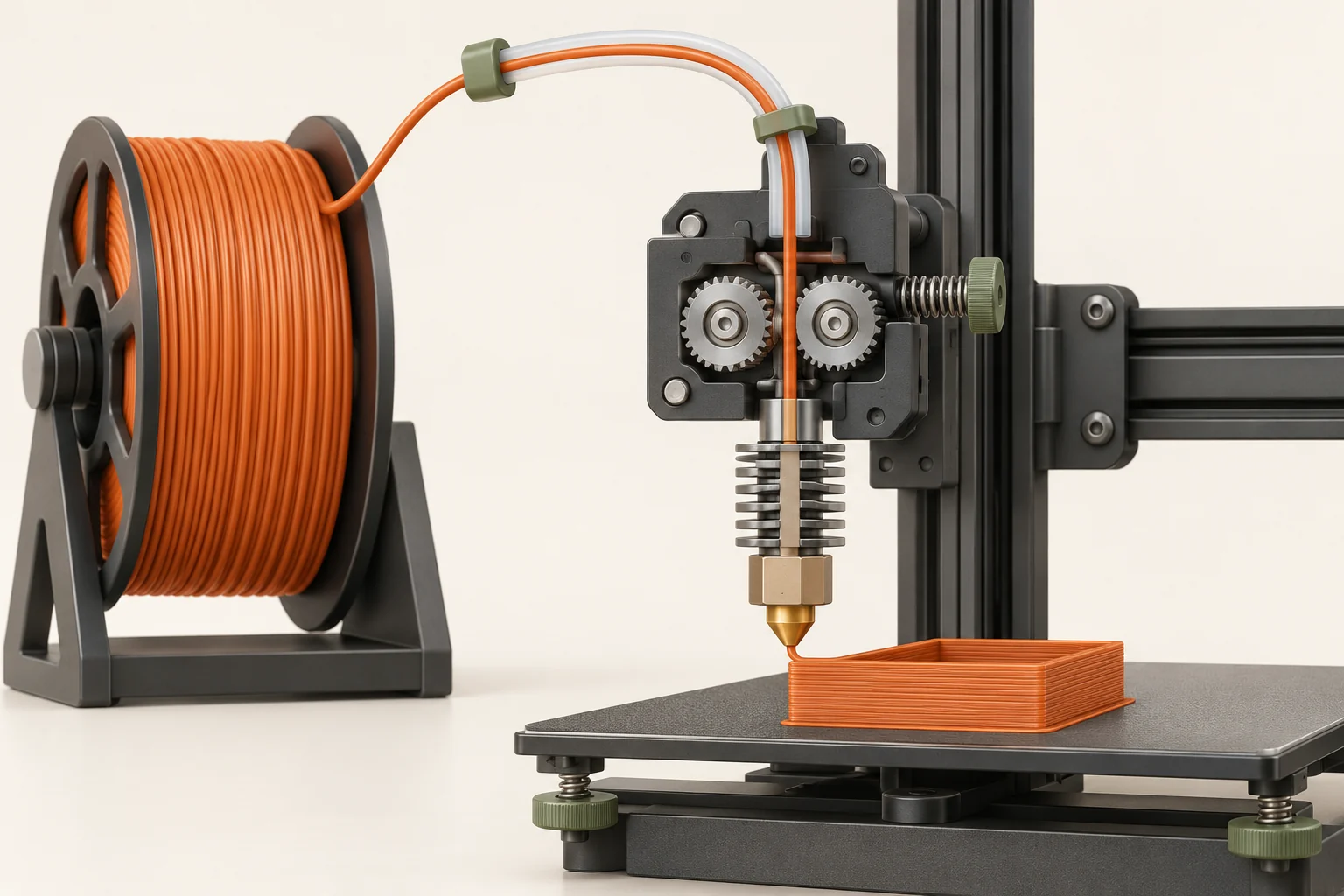
Moisture-sensitive material may need a protected path during a long print as well as between prints. Follow the product's requirements and the dry box or dryer manufacturer's instructions for feeding. Keep the spool supported and check that the guide route does not introduce sharp bends, excessive drag, or interference with the printer's normal movement.
Polymaker's PA6-CF instructions specifically discuss the stiffness of that grade and the need for a suitable feeding setup. That is a useful reminder that environmental control and mechanical delivery are linked. If a newly added dry box is followed by intermittent under-extrusion, inspect the path as well as the humidity. A dry spool that cannot turn freely still cannot feed the printer reliably.
Compare a controlled sample and keep the history
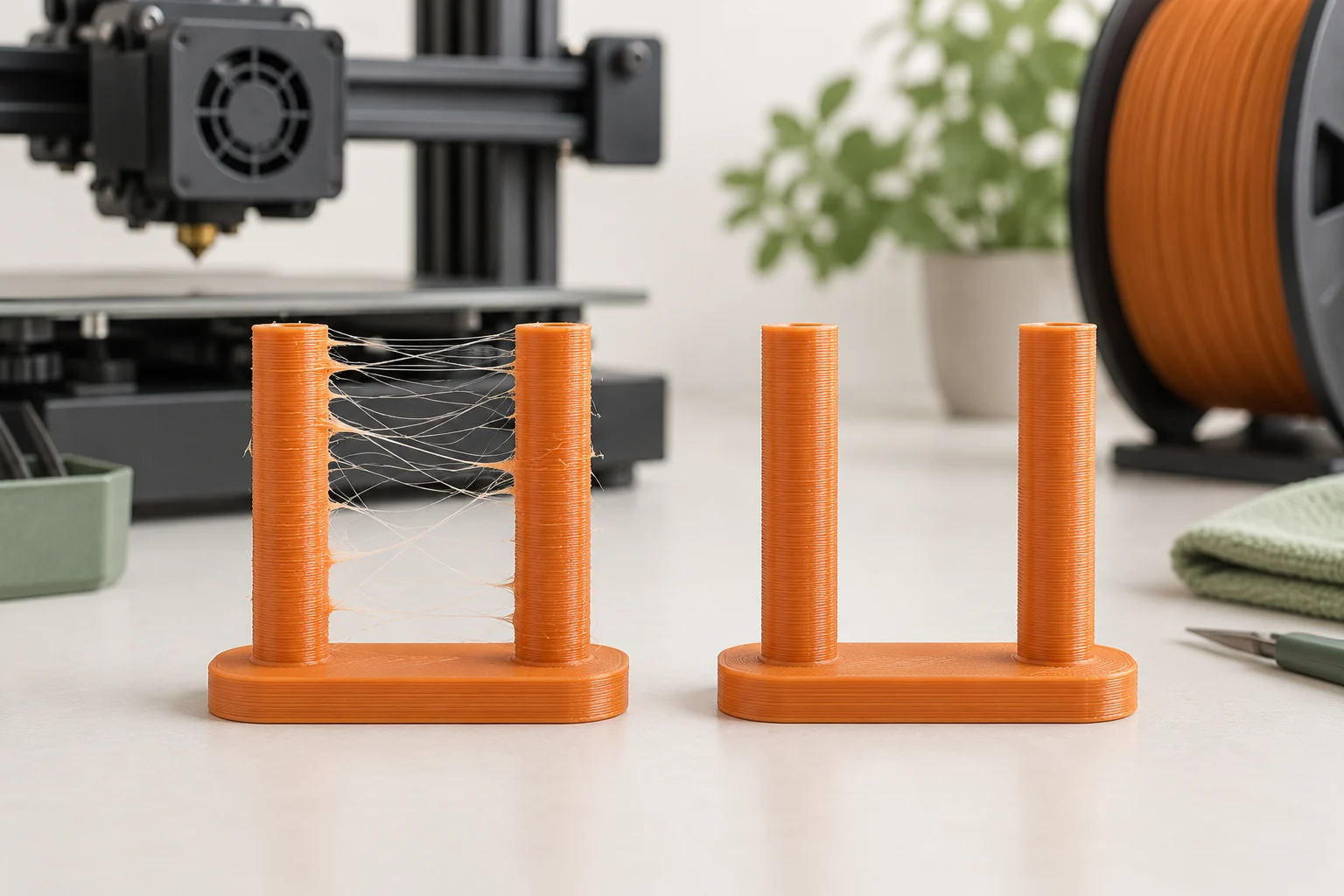
Our worked comparison uses a short saved model containing a plain wall and separated features. Print it with the existing profile, then repeat after the approved drying cycle while keeping geometry, nozzle, temperature, speed, and retraction unchanged. Compare the wall surface, strands, and extrusion consistency. If the outcome improves, record the drying and storage conditions alongside the sample.
If it does not improve, investigate other causes instead of repeatedly heating the spool. Drying cannot be assumed to reverse every kind of material damage or compensate for a printer fault. Store the spool with a label showing the opening date, last approved drying cycle, storage location, and relevant print result. For an important job, this history is more useful than a general claim that the material was 'kept dry.'
Common questions
Is a low humidity reading proof that the spool is dry?
No. It describes the air at the sensor, not the moisture already inside the polymer. Use the material's prescribed preparation and a relevant print comparison rather than relying on the display alone.
Can I use the same drying cycle for PLA, PETG, and nylon?
No universal cycle is appropriate. Follow the instructions for the exact product and confirm that its spool and the dryer can tolerate and maintain those conditions.
Does new vacuum-packed filament always need drying?
Follow the manufacturer's instructions and assess the packaging condition. A sealed package alone does not replace the product's preparation guidance, but drying every new spool automatically is not a universal requirement either.
Continue with the sources
- Drying filament Prusa Research · Checked 2026-10-15
- Prusa USS Drybox Prusa Research · Checked 2026-10-15
- Polyamide (Nylon) Prusa Research · Checked 2026-10-15
- PolyMide PA6-CF Product Information Sheet V1.5 Polymaker · Checked 2026-10-16
- Wet Filament Polymaker · Checked 2026-10-16
This guide synthesizes the cited references and includes illustrative examples, not hands-on test results. Follow the instructions for your exact printer, material, and software version. Generated illustrations simplify geometry and equipment; they are not photographs, measured results, or model-specific setup instructions.