Printer comparison · specs from manufacturer sources

ELEGOO Centauri Carbon vs Bambu Lab A1

How the two machines differ on paper: build volume, process, enclosure, nozzle temperature, launch year and the materials each manufacturer names. This is a specification comparison, not a hands-on test.

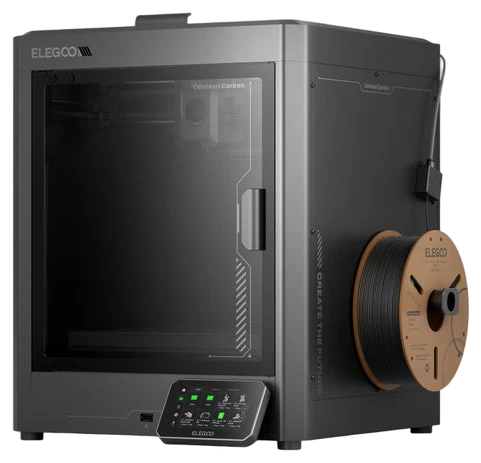
ELEGOO Centauri Carbon — official product imageFFFELEGOO — official manufacturer image
ELEGOO Centauri Carbon
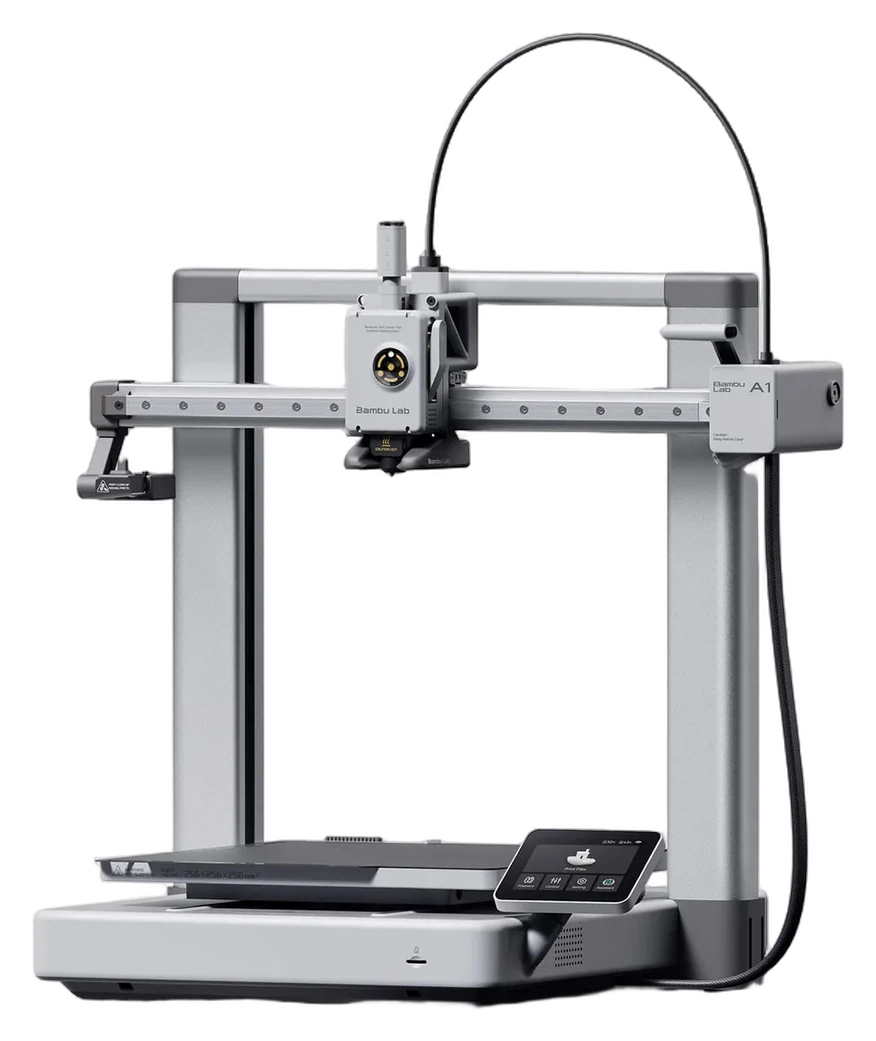
Bambu Lab A1 — official product imageFFFManufacturer image: Bambu Lab
Bambu Lab A1

Key differences

  • Both list the same nominal build envelope: 256 × 256 × 256 mm.
  • ELEGOO Centauri Carbon is enclosed; Bambu Lab A1 is an open-frame design.
  • ELEGOO Centauri Carbon reaches the hotter nozzle: 320 °C against 300 °C.
  • ELEGOO Centauri Carbon is the newer model (2025, against 2023).
  • Only the ELEGOO Centauri Carbon profile documents motion system (CoreXY), maximum print speed (500 mm/s).
  • Only the Bambu Lab A1 profile documents bed max (100 °C), nozzle diameter (0.4 mm), optional nozzle diameters (0.2, 0.6, 0.8 mm), toolhead speed max (500 mm/s), toolhead acceleration max (10000 mm/s²) and 5 more fields.

Generated from the two sourced profiles on 2026-11-02. Fields a source doesn't establish are left out of the comparison rather than guessed.

Before you choose

Published specifications don't settle print quality, reliability or noise. Compare the exact configuration, bundled accessories, regional price and support with each manufacturer, and check that the materials you need are supported on the configuration you'd buy.

Open in the interactive comparison

Specifications side by side

ELEGOO Centauri Carbon vs Bambu Lab A1: manufacturer-sourced specifications; matching rows are dimmed.
SpecificationELEGOO Centauri CarbonBambu Lab A1
ManufacturerELEGOOBambu Lab
Printing processFFFFFF
Build envelope (X × Y × Z)256 × 256 × 256 mm256 × 256 × 256 mm
Nominal box volume16.78 L16.78 L
EnclosureEnclosedOpen frame
Maximum nozzle temperature320 °C300 °C
Introduction year20252023
CollectionListing status onlyListing status only
Market grouping (editorial)DesktopDesktop
Materials named by the manufacturerNot verifiedPLA, PETG, TPU, PVA
Motion SystemCoreXYNot verified
Maximum Print Speed500 mm/sNot verified
Bed Max (°C)Not verified100
Nozzle Diameter (mm)Not verified0.4
Optional Nozzle Diameters (mm)Not verified0.2, 0.6, 0.8
Toolhead Speed Max (mm/s)Not verified500
Toolhead Acceleration Max (mm/s²)Not verified10000
Machine dimensions (mm)Not verified465 × 410 × 430
Machine weight (kg)Not verified8.3
Monitoring CameraNot verifiedLow frame rate; up to 1080p
Filament SensorsNot verifiedRunout, Odometry, Tangle
Power Loss RecoveryNot verifiedSupported

ELEGOO Centauri Carbon

Enclosed CoreXY filament printer with a 256 mm cubic build volume and a 320 °C hardened-steel nozzle.

Centauri Carbon combines automatic calibration with a chamber camera and a 256 mm cubic build space. ELEGOO quotes a 500 mm/s motion limit; actual part throughput depends on slicing and material settings.

Full sourced profile

Bambu Lab A1

Filament printer with a 256 mm cubic build volume.

The specification table identifies PLA, PETG, TPU and PVA as ideal materials. ABS, ASA, PC, PA, PET and fiber-reinforced polymers are explicitly not recommended; the nozzle temperature alone does not establish material suitability.

Full sourced profile

Sources

ELEGOO Centauri Carbon

Bambu Lab A1

Related comparisons

Keep exploring