Printer comparison · specs from manufacturer sources
Anycubic Kobra 3 vs Bambu Lab A1
How the two machines differ on paper: build volume, process, enclosure, nozzle temperature, launch year and the materials each manufacturer names. This is a specification comparison, not a hands-on test.
Bambu Lab A1 has the larger nominal build envelope: 256 × 256 × 256 mm, about 3% more box volume than Anycubic Kobra 3 (250 × 250 × 260 mm).
Both are open-frame designs.
Both list a maximum nozzle temperature of 300 °C.
Material lists differ: Bambu Lab A1 documentation also names PVA / BVOH supports. A material missing from a list means it isn't documented there, not that it can't print.
Only the Anycubic Kobra 3 profile documents print speed max (600 mm/s), acceleration max (20000 mm/s²), bed leveling (LeviQ 3.0 auto-leveling).
Only the Bambu Lab A1 profile documents bed max (100 °C), nozzle diameter (0.4 mm), optional nozzle diameters (0.2, 0.6, 0.8 mm), toolhead speed max (500 mm/s), toolhead acceleration max (10000 mm/s²) and 5 more fields.
Generated from the two sourced profiles on 2026-11-02. Fields a source doesn't establish are left out of the comparison rather than guessed.
Before you choose
Published specifications don't settle print quality, reliability or noise. Compare the exact configuration, bundled accessories, regional price and support with each manufacturer, and check that the materials you need are supported on the configuration you'd buy.
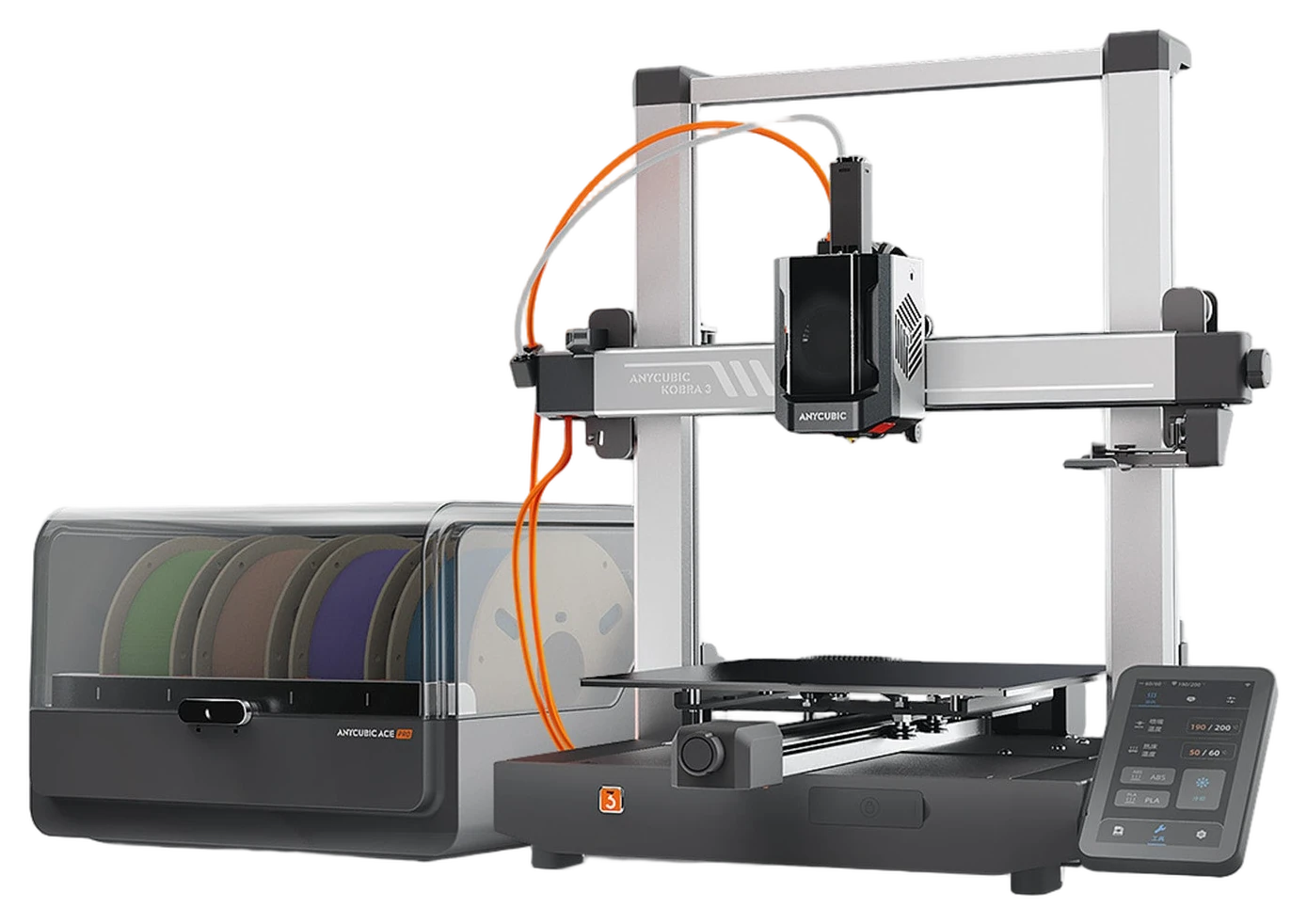
Gantry-style filament printer with a 250 × 250 × 260 mm build volume, 300 °C nozzle and LeviQ 3.0 leveling.
Anycubic lists the Kobra 3 with a 250 x 250 x 260 mm print volume, a nozzle rated to 300 °C and a short-distance direct-drive extruder on a gantry frame. Its stated filament list is PLA, PETG and TPU, with TPU not compatible with the ACE Pro unit.
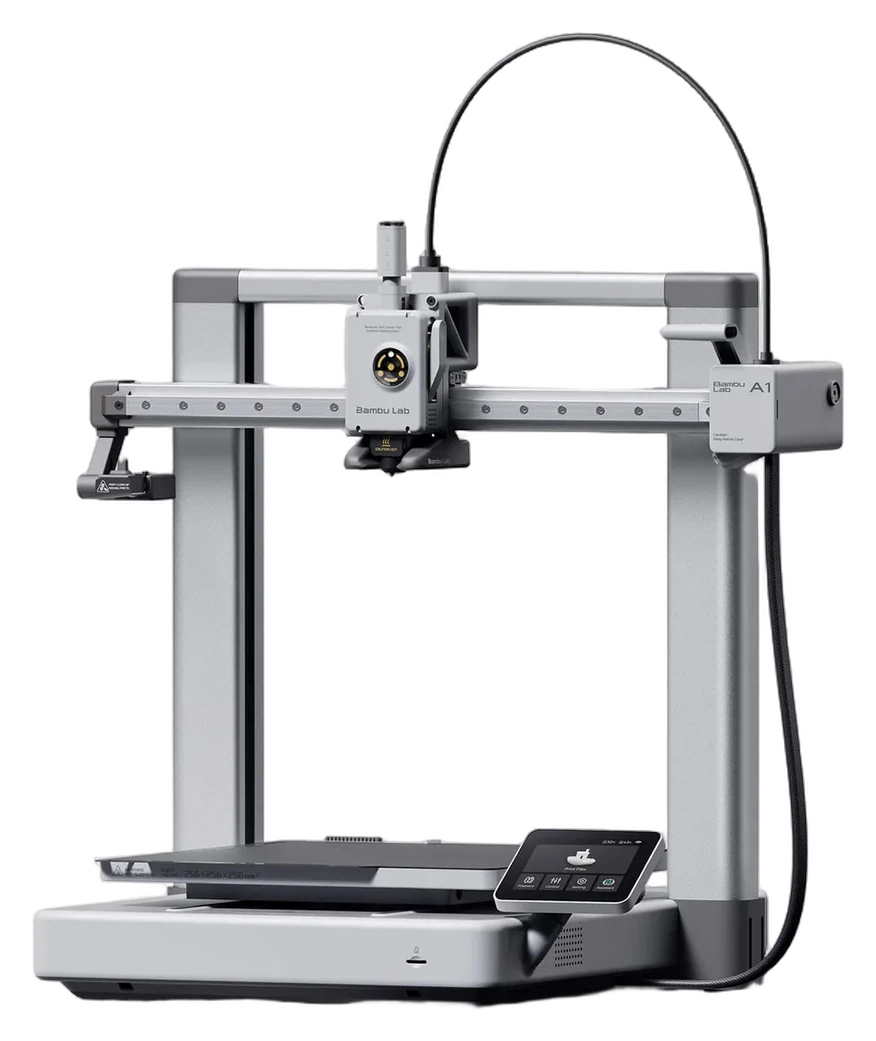
Filament printer with a 256 mm cubic build volume.
The specification table identifies PLA, PETG, TPU and PVA as ideal materials. ABS, ASA, PC, PA, PET and fiber-reinforced polymers are explicitly not recommended; the nozzle temperature alone does not establish material suitability.