Rochester lab builds a $450 bioprinter from a plastic 3D printer that prints over 100 layers
A syringe pump replaces the filament extruder, and a support gel keeps bacteria-laden prints alive four weeks or more.
What happened
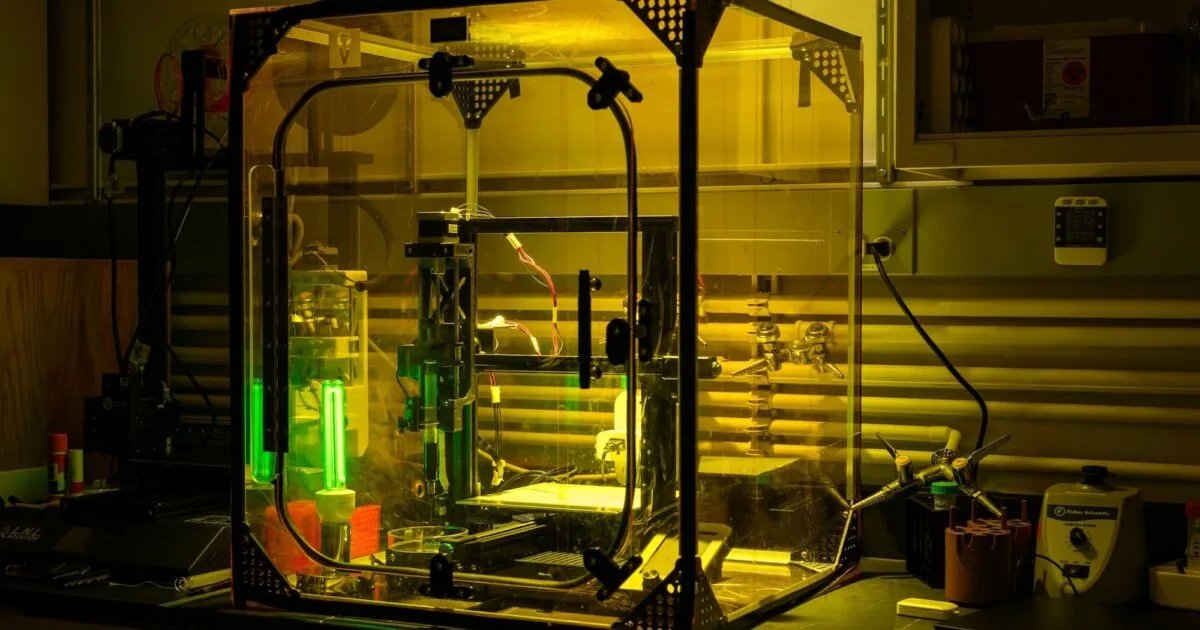
On 13 November 2026 the University of Rochester described work by Anne S. Meyer’s lab, with Cornell colleagues, published in ACS Applied Polymer Materials. The team removed the filament extruder from a standard plastic 3D printer and fitted a syringe pump that pushes out bio-ink, a mix of living cells and a polymer solution that gels. The build costs $450 against commercial bioprinters the release puts at upwards of $100,000, and build instructions are posted on GitHub.
The pump both extrudes and retracts, which stops oozing and gives crisp edges. Earlier DIY bioprinters managed fewer than 20 layers; this one exceeds 100 and can form hollow cavities. It prints into a slurry support gel, with one version for easy print removal and one for incubation that keeps microbes alive four or more weeks, against about nine days in earlier methods. Possible uses include biofilm research, water clean-up and breaking down waste such as plastic.
The university’s article does not name the printer brand or model, though trade coverage reports it as a modified Ender 3. It is a university news release and discusses no limitations. The material printed is engineered living bacteria, not human tissue.
Read the sources
Primary-source reporting; this is not a hands-on review. Sources checked Nov 17, 2026.