Penn State uses micro solar cells and light to steer cell alignment, with 3D-printed tissue as the goal
Fibroblasts on silicon chips aligned with the photovoltaic pattern under light, but the work was on flat chips and no tissue was printed.
What happened
On 12 November 2026 Penn State described an Advanced Functional Materials paper from Ibrahim Ozbolat’s group, with doctoral candidate Yifan Tao as first author. Tiny photovoltaic cells patterned on silicon wafers turn light into a weak electrical current, so cells can be influenced without wired electrodes. The motivation is that bioprinted cells are placed precisely but can then migrate and spread.
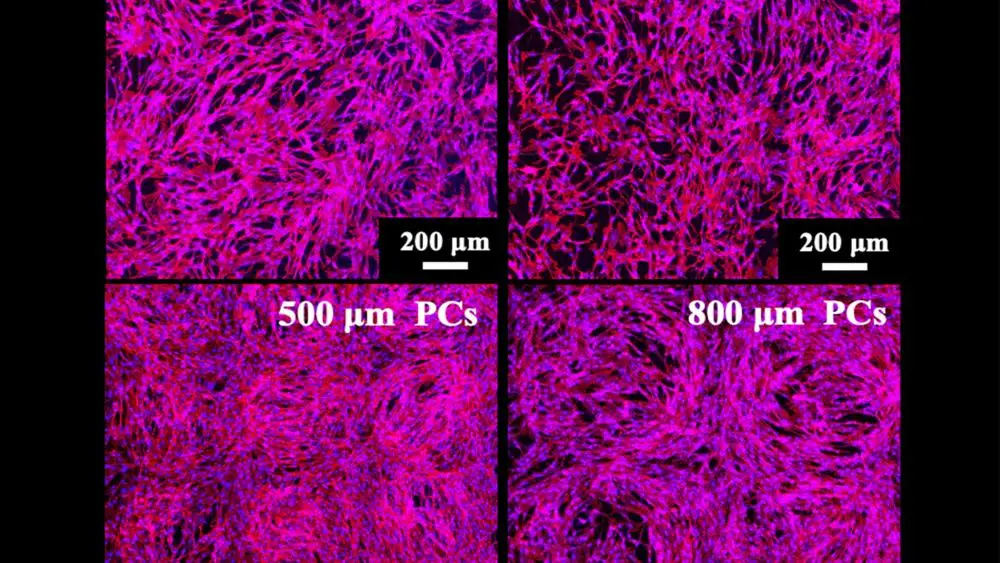
Two layouts were tested: varying cell diameter from just under a millimetre down to 80 micrometres, and fixing the diameter while changing the pattern shape. Lung and dermal fibroblasts grew on the chips for seven days under different light intensities. Without light, alignment was largely random; with light it tracked the photovoltaic layout, and brighter or closer light changed the effect.
The article states the fibroblasts sat on top of flat chips and no tissue was printed; 3D testing is a stated future goal, along with more sensitive cell types such as cardiac or muscle cells. Control is incomplete because cell-to-cell interactions still matter. Funding came from Huck Institutes chair funds and NIH grants.
Read the sources
Primary-source reporting; this is not a hands-on review. Sources checked Nov 17, 2026.