A printed concrete bridge exposes the limits of design optimization
MIT incorporates nozzle and toolpath constraints into the design of a load-tested bridge.
What happened
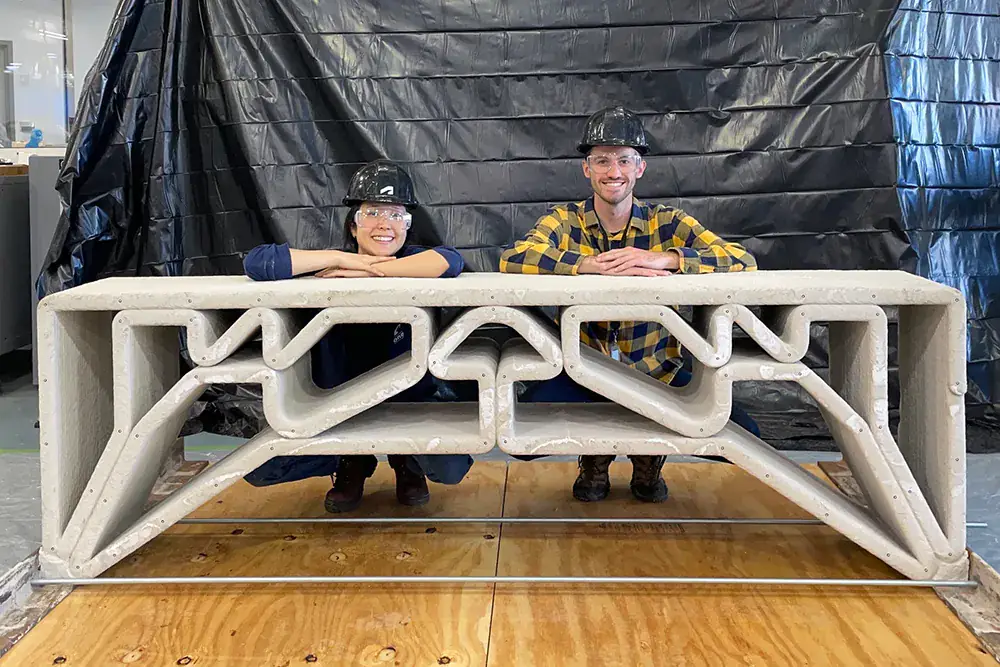
MIT’s July 15 account describes a 2.3-meter concrete bridge designed, printed and load-tested using an optimization framework that includes fabrication constraints. Those constraints include bead width, turning limits and a continuous print path.
The roughly 900-pound bridge supported more than 2,000 pounds distributed across its top in the reported test. The study found that printer limitations strongly influenced material use.
The bridge was designed for compression and later broke when lifted at a corner, introducing tension. The demonstration therefore does not establish suitability under every loading or handling condition.
Read the sources
Primary-source reporting; this is not a hands-on review. Sources checked Oct 24, 2026.