X-Hinges embeds motion sensing into printed mechanisms
Different conductive materials help distinguish useful sensor signals from connecting traces.
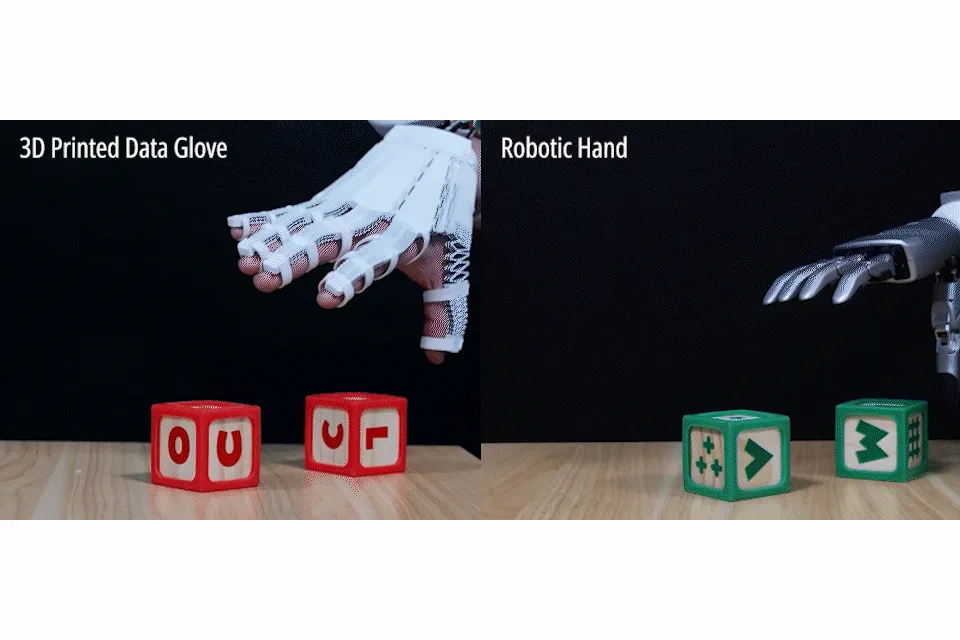
What happened
MIT’s October 22 report describes X-Hinges, software developed with researchers at Tianjin University to design printed mechanisms with embedded sensing. Demonstrations include an interactive lamp and a glove that relays finger movements.
The system assigns different materials to sensors and wire-like traces. This addresses interference that can arise when both functions use the same material.
These examples demonstrate an approach to sensing human interaction. Descriptions of objects as self-aware should be understood as responsive sensing, not consciousness or autonomous understanding.
Read the sources
Primary-source reporting; this is not a hands-on review. Sources checked Oct 24, 2026.