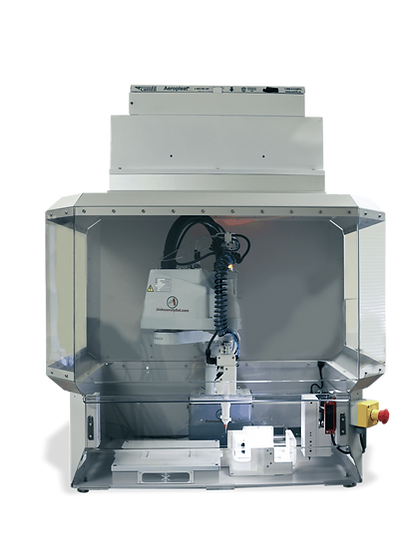
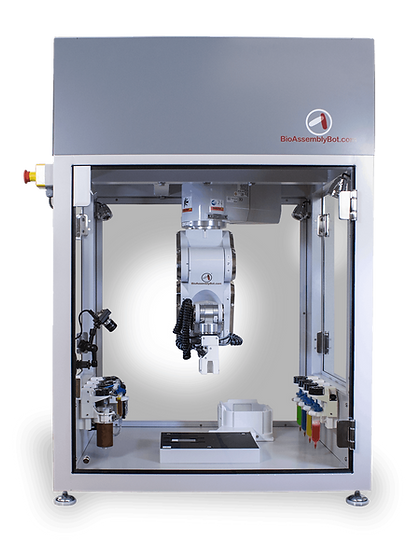
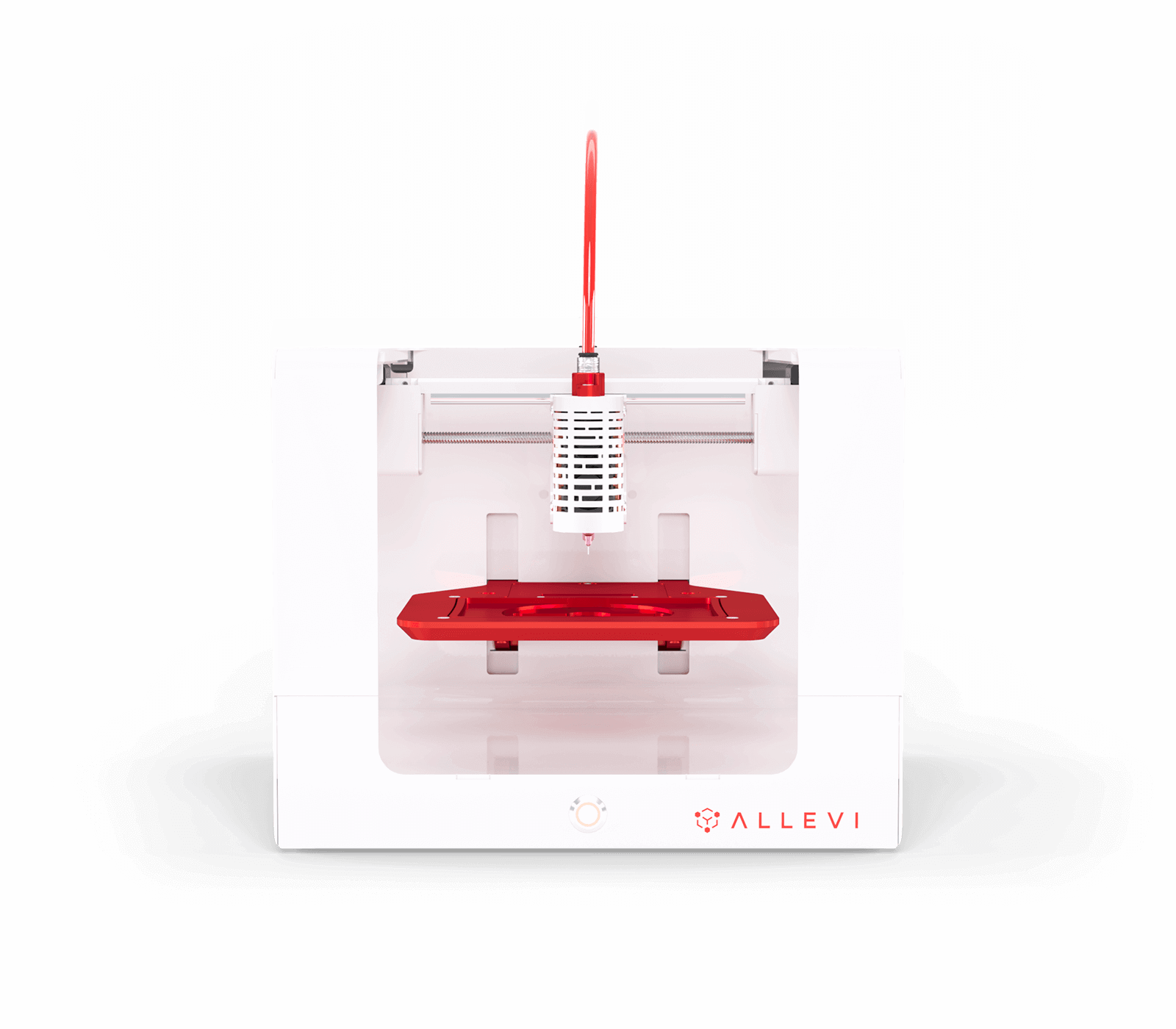
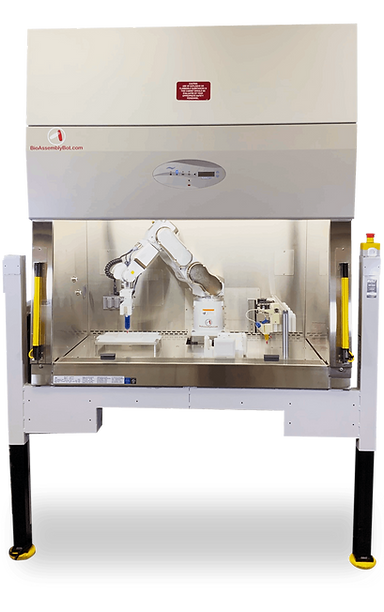
 Extrusion bioprintingManufacturer image: Advanced Solutions Life Sciences
Advanced Solutions Life Sciences BioAssemblyBot 500
Robotic biofabrication system supporting syringe extrusion tools.
Source reviews: 2026-10-16.
Specifications are reported claims, not independent test results.
The details that matter.
Published specifications for this model. Follow a field's source for its configuration and measurement conditions; older fields refer to the profile's reference list.
| Introduction year | Not verified |
|---|---|
| Model family | Not verified |
| Process | Extrusion bioprinting |
| Build envelope (X × Y × Z) | Not verified |
| Nominal box volume | Not verified |
| Enclosure | Not verified |
| Materials cited in this profile | Bioinks |
| Manufacturer listing status | Manufacturer documentation verified; availability not established |
| Regional stock and price | Check the manufacturer |
| Market grouping | Professional · editorial grouping |
Technical specifications
| Robot Axes | 6 |
|---|---|
| Maximum Tool Hands Per Run | 10 |
| Software | TSIM, BioApps |
| Print Stage | Temperature controlled |
| Tool Changing | Automatic exchange of compatible BioAssemblyBot Hands |
| Tip Calibration | Adaptive tip detection |
| Cabinet | Class II, Type-A biosafety cabinet |
| Dispensing | Pneumatic, Mechanical |
| Filtration | HEPA; manufacturer specifies 99.97% at 0.3 µm |
| Base | Powered lift base |
Robotic biofabrication
BAB 500 combines additive deposition with material handling. Tool choice determines whether a workflow prints biomaterial, transfers liquid or manipulates laboratory samples.
Planning a workflow
TSIM supports geometry preparation and BioApps sequences experimental operations. Tool compatibility and environmental configuration should be matched to the experiment; these capabilities do not establish clinical approval of a printed construct.
Explore the model family.
Introduction year has not been established from the reviewed source.
Explore Advanced Solutions Life Sciences through the generationsRead this with the specifications
Tool configuration determines capabilities; robot reach is not converted into a rectangular fit volume.
A larger nominal envelope does not establish better print quality. Fit depends on the configuration, usable area, supports, and orientation.