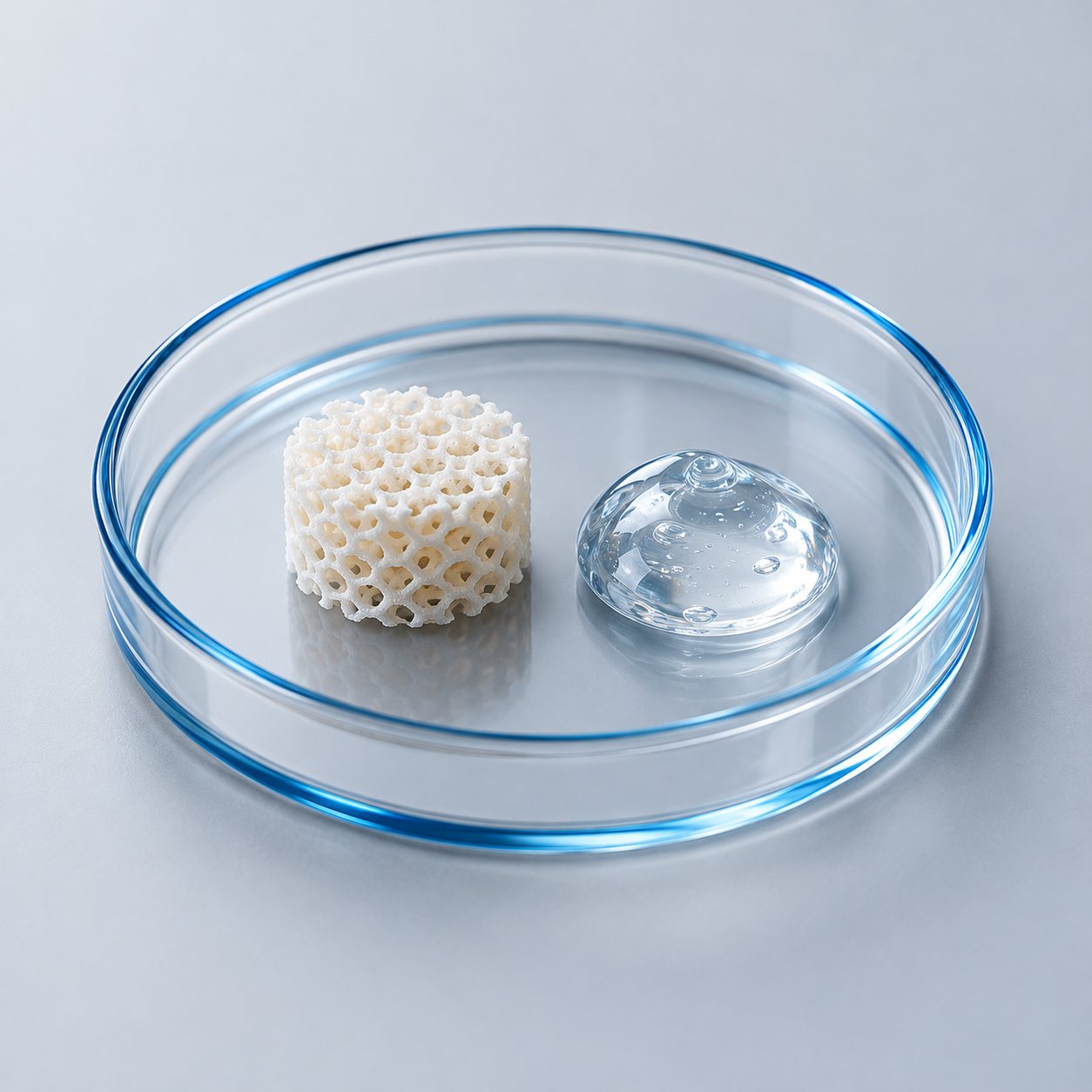
MANUFACTURER SPOTLIGHT
CELLINK
Explore the material range.
Explore the supplier reference for this material family. Confirm the exact grade, process and current availability.
Explore supplier resources ↗
Research bioprinting
Modified gelatin used in photocrosslinkable research hydrogels.
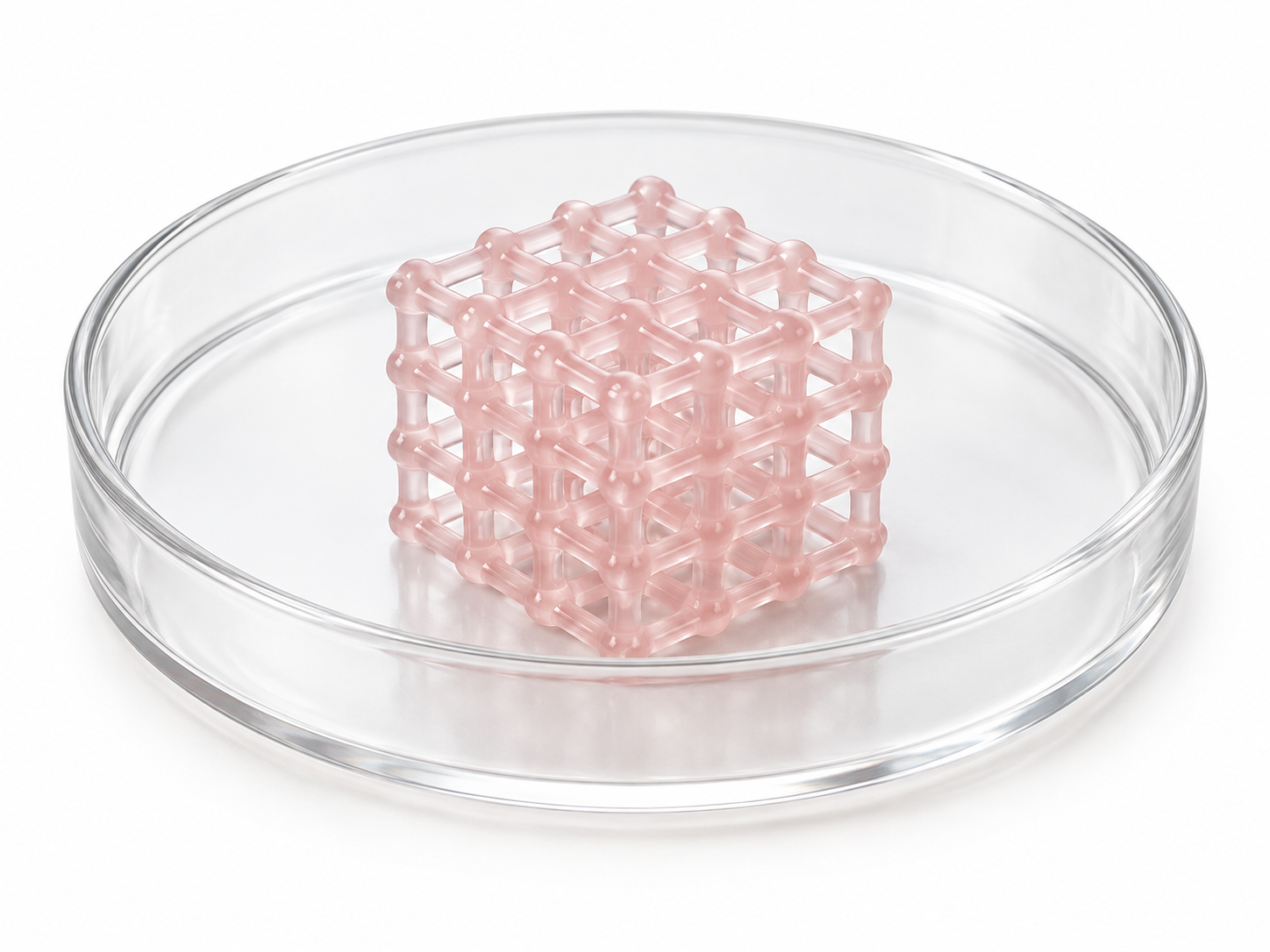
Illustrative AI-generated applications. Suitability depends on the grade, design and process.
THE PEOPLE BEHIND THE MATERIALS
Explore material collections and supplier documentation.
Material sources →MANUFACTURER SPOTLIGHT
Explore the supplier reference for this material family. Confirm the exact grade, process and current availability.
Explore supplier resources ↗Supplier research
A product directory has not yet been verified for GelMA bioink. Start with the supplier references in this guide; availability and formulation vary.
Explore material sources ↗Modified gelatin used in photocrosslinkable research hydrogels. Evaluate the benefits alongside the limitations of the exact grade and printing process.
From feedstock to finished part
This workflow is an overview. Use the supplier’s actual machine profile, handling instructions and finishing protocol.
Where to start
Application examples are starting points for evaluation. Validate the exact material, geometry and process against your part requirements.
The other side of the choice
Evidence, with context
Consult the linked grade datasheets for values. Unknown values are not zero, and measurements from different print conditions should not be treated as equivalent.
Follow the evidence
Family guidance expanded October 17, 2026. Source dates are shown individually. Catalog pages establish available material classes; product-level qualification requires the specific datasheet.